






news
University of Tübingen
Results 81 - 100 of 152.
Pharmacology - Environment - 21.04.2023
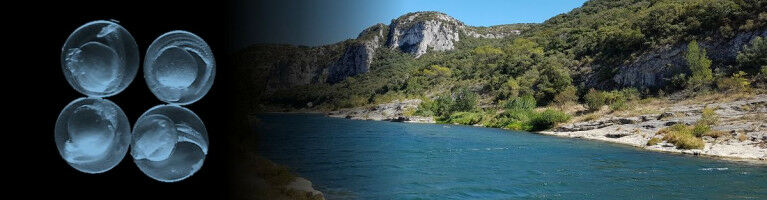
A study by researchers from the Universities of Tübingen and Athens has found that the toxicity of chemicals in lakes and rivers may vary by several orders of magnitude depending on the water's acidity. Professor Heinz Köhler from the University of Tübingen's Institute of Evolution and Ecology, working with colleagues from Athens and the German Environment Agency, tested the effect of 24 substances, most of which are used as drugs, on the development of fish embryos in realistic scenarios.
Health - Pharmacology - 21.03.2023

Effective drugs against viral diseases like COVID-19 are urgently needed now and in the future. The emergence of viral mutants and yet unknown viruses could push vaccines to their limits. The DZIF scientist and bioinformatician Andreas Dräger from the University of Tübingen is working on a computer-based method that can help to accelerate the time-consuming identification and development of antiviral agents.
Astronomy & Space - History & Archeology - 20.03.2023

An Egyptian-German research team has uncovered yet another series of colorful ceiling paintings at the Temple of Esna in Upper Egypt. The researchers reported that the Egyptian restoration team, led by Ahmed Emam, succeeded in completely restoring and re-coloring a representation of the heavens. The images, executed in relief, include a complete depiction of the signs of the zodiac.
Life Sciences - 16.03.2023

Researchers at the University of Tübingen have developed a new method to better study atheroscle-rosis in mice. The non-invasive imaging method helps to better understand and treat narrowing of blood vessels, a cause of heart attacks and strokes. The new approach may also significantly reduce the number of animals used in experiments compared to previous methods.
Health - Life Sciences - 08.03.2023

Important decisions are made early in life - some even before birth. Already in the womb, environmental factors influence the child's development and can have an impact on health. For example, certain infections increase the risk of developing an autism spectrum disorder later on. A research team led by Dr. Simone Mayer of the Hertie Institute for Clinical Brain Research and the University of Tübingen has now deciphered a molecular mechanism of this connection.
History & Archeology - Chemistry - 01.02.2023

Analyzing the residue on vessels in a mummification workshop has given a team of researchers from LMU Munich and the University of fresh insights into how the ancient Egyptians embalmed the bodies of their dead. The archeologists have been able to determine what substances were used for which part of the body.
Life Sciences - History & Archeology - 12.01.2023

An international team lead by researchers from the University of Tübingen, Senckenberg Centre for Human Evolution and Palaeoenvironment in Tübingen and Max Planck Institute for Evolutionary Anthropology in Leipzig have identified a previously unknown hunter-gatherer population in the Altai some 7,500 years ago which illustrates the high mobility between populations in Siberia and elsewhere in North Asia.
Astronomy & Space - 09.01.2023

An international team of astronomers has discovered eight of the hottest stars in the universe, all with surfaces hotter than 100,000 degrees Celsius. The work was published in Monthly Notices of the Royal Astronomical Society. The paper is based on data gathered using the Southern African Large Telescope (SALT), the largest single optical telescope in the southern hemisphere, with a 10m x 11m mirror.
History & Archeology - 23.12.2022

Humans have been using bear skins to protect themselves from cold weather for at least 300,000 years. This is suggested by cut marks on the metatarsal and phalanx of a cave bear discovered at the Lower Paleolithic site of Schöningen in Lower Saxony, Germany. This makes it one of the oldest examples of this type in the world.
History & Archeology - Campus - 21.12.2022
Gender equality is good for economic growth
Over 500 years, the economy developed better in parts of Europe where women married in their 20s instead of their teens, according to a study by economic historians Alexandra de Pleijt from Wa-geningen University in the Netherlands and Jörg Baten from the University of. Their study has been published in the journal World Development .
History & Archeology - 15.12.2022

When prehistoric people re-sharpened cutting tools 300,000 years ago, they dropped tiny chips of flint - which today yield evidence of how wood was processed by early humans. The small flint flakes were discovered at the Lower Paleolithic site of Schöningen, Lower Saxony. Now, a multidisciplinary team led by the University of Tübingen and the Senckenberg Centre for Human Evolution and Palaeoenvironment (SHEP) in Tübingen has analyzed this very old material for the information it can provide.
Earth Sciences - 06.12.2022

Major ice streams can shut down, shifting rapid ice transport to other parts of the ice sheet, within a few thousand years. This was determined in reconstructions of two ice streams, based on ice-penetrating radar scans of the Greenland ice sheet, that a team of researchers led by the Alfred Wegener Institute, in which the University of Tübingen is also involved, has just presented in the journal Nature Geoscience.
Environment - 05.12.2022

The livelihood of one in three people on earth depends on livestock and pastoralism. Especially in arid regions, which account for more than 40 percent of the planet's land area, grazing is essential for survival. Despite this importance for humans and nature, until recently there had been no global field study on the impact of pasture management on dryland performance.
History & Archeology - 30.11.2022

The gold in objects from Troia, Poliochni - a settlement on the island of Lemnos, located about 60 kilometers off the coast of Troia - and Mesopotamian Ur has the same geographical origin and was traded over long distances. This is the conclusion reached by an international team of researchers who used an innovative mobile laser method to analyze samples of famous Early Bronze Age jewelry from Troia and Poliochni for the first time.
Health - Life Sciences - 17.11.2022
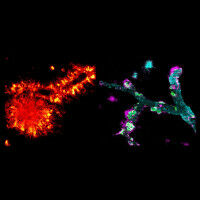
The protein medin is deposited in the blood vessels of the brains of Alzheimer's patients along with the protein amyloid-β. DZNE Re-searchers have discovered this so-called co-aggregation. They have now published their observation in the renowned journal Na-ture. "Medin has been known for over 20 years, but its influence on diseases was previously underestimated.
Astronomy & Space - Physics - 03.11.2022

An X-ray pulsar is a rotating magnetized neutron star. The very first direct measurement of the polarization of an X-ray pulsar by the Imaging X-ray Polarimetry Explorer (IXPE) space telescope has challenged previous models of such systems. The degree of polarization of the X-ray pulsar Hercules X-1 was much lower than theoretically predicted, so astrophysicists are now having to reconsider their basic ideas about the geometry and structure of matter flows.
Astronomy & Space - Physics - 26.10.2022

The lightest neutron star so far found is located at the center of the supernova remnant HESS J1731'347 . Dr. Victor Doroshenko, Dr. Valery Suleimanov, Dr. Gerd Pühlhofer and Professor Andrea Santangelo from the High Energy Astrophysics section of the University of Tübingen's Institute of Astronomy and Astrophysics discovered the unusual object with the help of X-ray telescopes in space.
Campus - 12.10.2022

Environment - 26.09.2022

The second option is more difficult and time consuming. In it, the leaves have to be heated in a kind of underground distillery for several hours, so that the tar drips into a container. It is not known which method was used. Either way, says Schmidt, it was astonishing that early modern humans at that time did not use any plants other than yellowwoods as sources of glue.
Paleontology - Life Sciences - 08.09.2022

When they re-analyzed a skeleton that was discovered in Trossingen in 1922, consisting mainly of the rear of the body, Regalado Fernandez and Werneburg established that many of the bones were not the same as a typical Plateosaurus . For instance, the partial skeleton displayed, among other derived characters, broader and more strongly-built hips with fused sacral vertebrae as well as unusually large and robust long bones - both features implied locomotion on four legs.


