








news
University of Stuttgart
Results 1 - 20 of 50.
Chemistry - Materials Science - 25.02.2026
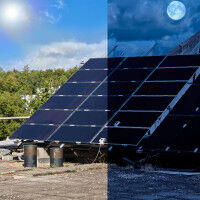
A team from the University of Stuttgart and international researchers have succeeded in making perovskite solar cells more efficient and more resistant to environmental influences. This is another important step towards the application of a technology that holds great promise for photovoltaics. Optimal material mixture sought Perovskite solar cells are a promising technology for photovoltaics.
Physics - Chemistry - 16.10.2025
Two physicists from the University of Stuttgart have proven that Carnot's principle, a central law of thermodynamics, does not apply to objects of the size of atoms whose physical properties are linked (so-called correlated objects). This finding could, for example, advance the development of tiny, energy-efficient quantum motors.
Life Sciences - Health - 16.09.2025
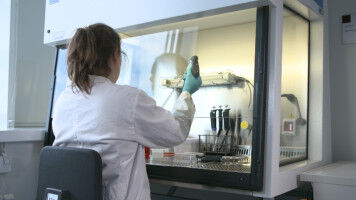
CRISPR/Cas9 was awarded the Nobel Prize in Chemistry in 2020. The process known as "gene scissors" makes it possible, among other things, to better understand how human cells function and remain healthy. Researchers at the University of Stuttgart have further developed CRISPR for this purpose. They present their CRISPRgenee method in the journal "Cell Reports Methods".
Physics - Environment - 08.09.2025
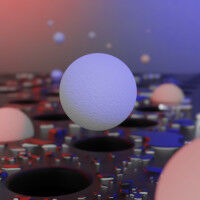
A joint team from the University of Stuttgart and the University of Melbourne in Australia has developed a new method for the simple analysis of tiny nanoplastic particles in environmental samples. All that is needed is an ordinary optical microscope and a newly developed test strip - the so-called optical sieve.
Physics - Materials Science - 22.04.2025

A research group at the University of Stuttgart has succeeded for the first time in manipulating light by interacting with a metal surface in such a way that it exhibits completely new properties. The researchers have now published their findings in the journal "Nature Physics". DOI: 10.1038/s41567-025-02873-1 "With our results, we are adding another chapter to the still young field of skyrmion research," explains Harald Giessen , head of the 4th Physics Institute at the University of Stuttgart, in whose working group the success was achieved.
Life Sciences - Physics - 21.06.2022

Introducing functional DNA-based cytoskeletons into cell-sized compartments - Publication Scientists from the 2. Physics Institute at the University of Stuttgart and the Max Planck Institute for Medical Research were now able to take the next step towards synthetic cells: They introduced functional DNA-based cytoskeletons into cell-sized compartments and showed functionality.
Physics - Innovation - 20.06.2022

Use of quantum light leads to a significant improvement in signal-to-noise ratio [Picture: PI 3 / Florian Kaiser] Whether it's an online conference or a hearing aid, a high noise level in the microphones used, or significant background noise will disrupt any conversation, and better microphones are urgently needed.
Chemistry - Physics - 26.05.2022

Researchers aim for more targeted control of catalytic reactions and are focusing on mesoporous materials [Picture: SFB 1333] The collaborative research center "Molecular heterogeneous catalysis in confined geometries" (SFB 1333) at the University of Stuttgart is entering its second funding period and has received funding of almost 12 million euros.
Physics - Chemistry - 19.05.2022

Physicists at the University of Stuttgart detect a novel binding mechanism between small and giagantic particles. [Picture: PI 5, Nicolas Zuber] Researchers at the 5th Physical Institute of the University of Stuttgart have verified a novel binding mechanism forming a molecule between a tiny charged particle and in atomic measures gigantic Rydberg atom.
Environment - 04.05.2022
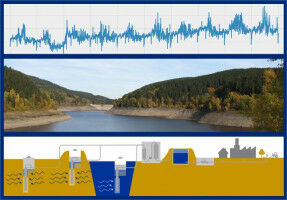
The research network "TrinkXtrem" wants to improve the forecast quality of groundwater models during extreme weather events. [Picture: Pixabay/tvjoern] Ensuring the supply of drinking water during extreme weather events such as a long drought or heavy rainfall - this is the overarching goal of a new research project named TrinkXtrem.
Life Sciences - 31.03.2022
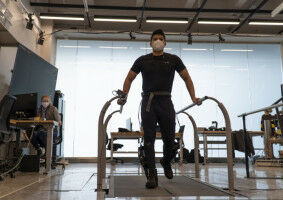
Researchers from the University of Michigan and the University of Stuttgart developed a method by which users can adjust exoskeletons themselves. [Picture: University of Michigan/Robotics Institute] Robotic exoskeletons support the movements of the persons wearing them and, for example, help impaired users to regain mobility.
Environment - Social Sciences - 03.03.2022
’The impacts of climate change depend on the vulnerability and adaptability of societies’
Prof. Jörn Birkmann from the University of Stuttgart is a co-author of the latest report of the Intergovernmental Panel on Climate Change [Picture: canva.com] Extreme weather events resulting from climate change will become more frequent and more severe, but the impacts will affect societies very differently, depending on their respective vulnerability and adaptability: This is one of the findings of the 6th Assessment Report of the Intergovernmental Panel on Climate Change (IPCC), which was presented at the Federal Press Conference on February 28, 2022.
Materials Science - 15.02.2022

The project "HygroShape" is using a new approach in digital design and manufacturing to program wood as a natural material [Picture: University of Stuttgart / ICD, Robert Faulkner] Elegantly curved seating furniture that is delivered in a flat-pack and assumes its shape overnight all by itself - this may sound like a dream to those who ever puzzled over the assembly instructions from a furniture store.
Environment - Earth Sciences - 14.02.2022

The consortium "CoKlimax" is developing tools for utilizing Copernicus data for urban planning Whether heat waves or heavy rain: Cities with their high population and building densities are particularly hard hit by the impacts of climate change.
Life Sciences - Health - 31.01.2022
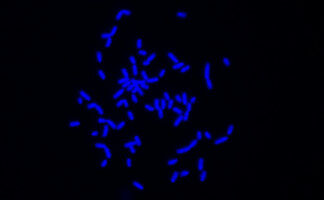
Researchers use epigenetic factors to investigate the role of stress in the development of tumor diseases - test subjects wanted! [Picture: NASA] Experts believe that stress plays a major role in the development of tumors. One occupational group, for example, that experiences extreme stress over a short period of time is astronauts.
Physics - Computer Science - 18.01.2022

BMBF project PhotonQ brings together seven universities and research institutions as well as industrial partners [Picture: University of Stuttgart / Uli Regenscheit] Quantum computers will one day be able to solve problems at high speed that cannot be handled by classical computer systems. However, in order for these computers to become practical, they must process a significantly higher number of qubits and have lower error rates.
Computer Science - Mechanical Engineering - 26.04.2021
New PP: Daring More Intelligence
Date: April 26, 2021, No. DFG approves new priority program coordinated by the University of Stuttgart Design Assistants in Mechanics and Dynamics are the topic of a new priority program (PP) of the German Research Foundation (DFG) that aims to bring more artificial intelligence (AI) into the design process of technical systems.
Physics - 16.04.2021
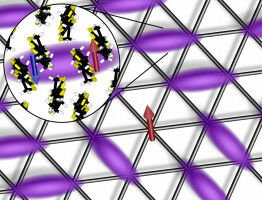
A quantum spin liquid is a state of matter in which interacting quantum spins do not align even at lowest temperatures, but remain disordered. Research on this state has been going on for almost 50 years, but whether it really exists has never been proven beyond doubt. An international team led by physicist Prof. Martin Dressel at the University of Stuttgart has now put an end to the dream of a quantum spin liquid for the time being.
Health - Life Sciences - 29.03.2021

Immunoglobulins are antibodies that are generated by the immune system in answer to the sudden emergence of macromolecules. For example, these might be on the cell surface of bacteria that have infiltrated the body, or they are found in abnormal somatic cells. These play an important role in the identification and suppression of infections, such as Hepatitis A/B or Rabies, and in controlling cancer cells.
Physics - 05.03.2021
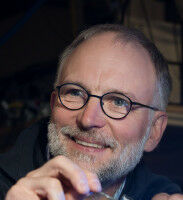
The European Research Council will support the research of Prof. Tilman Pfau with an ERC Advanced Grant for his new approach to understanding fermionic matter with long-range interactions using innovative quantum gas microscopy techniques. The ERC Advanced Grants are highly-prestigious grants awarded to well-established, leading scientists with a track record of groundbreaking research achievements over the past decade.


