


news 2020
« BACK
 Proteins Analysed, Volunteers Sought
 Enzymes as double agents: new mechanism discovered in protein modification
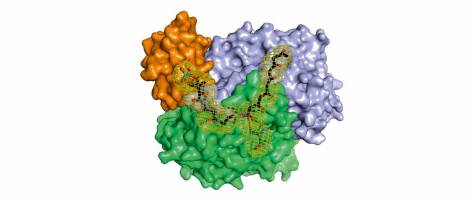 How do bacteria build up natural products?
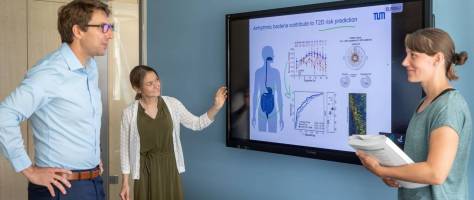 Gut bacteria improve type 2 diabetes risk prediction
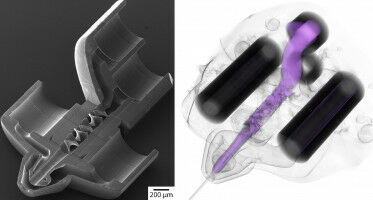 Operating with precision
 Feeds of the Future
 Hormone systems can still be adapted in adulthood
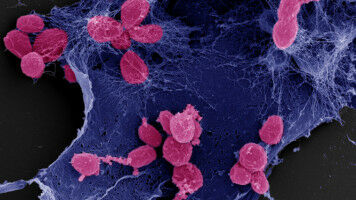 Water bacteria have a green thumb
 Researchers identify "hot spots" for developing lymphatic vessels: Experiments on zebrafish
 View into plant cells: A membrane protein is targeted to two locations
 Protecting the Neuronal Architecture
 New experiment design improves reproducibility
 Selectively Reactivating Nerve Cells to Retrieve a Memory
 Triggered by light, a novel way to switch on an enzyme: Biotechnology
 High-resolution 3D view inside tumors
 Should tomatoes go in the fridge?
 Controlling cells with light
 A disease trigger for pancreatitis has been identified
Life Sciences
Results 61 - 80 of 108.
Life Sciences - Chemistry - 09.07.2020
A research team led by zoologist Dr Amy MacLeod has been using drones to count marine lizards on the Galapagos Islands. The aim of the Leipzig University project is to determine the colony sizes of this vulnerable species and, with the help of volunteers, to precisely locate them - in order to ultimately be able to better protect the iguanas.
Life Sciences - Chemistry - 07.07.2020
Proteins are the workers in a cell and, as the "basic element of life", are responsible for the most widely varying metabolic processes. In plants, for example, they take on an important function in photosynthesis. In order to be able to work purposefully, proteins change their chemical form after they have been produced in a cell - for example, through protein acetylation, when an acetyl group is transferred to the protein.
Life Sciences - Chemistry - 06.07.2020
X-ray structure analysis gives detailed insights into molecular factory The active agents of many drugs are natural products, so called because often only microorganisms are able to produce the complex structures. Similar to the production line in a factory, large enzyme complexes put these active agent molecules together.
Health - Life Sciences - 06.07.2020
Large-scale study with more than 4000 participants at ZIEL - Institute for Food & Health The composition and function of bacteria in the human intestine - the so-called gut microbiome - changes as the day progresses. This was established by researchers based in Freising at ZIEL - Institute for Food & Health of the Technical University of Munich (TUM) with one of the largest studies related to microbiomes and diabetes comprising more than 4000 participants.
Life Sciences - Chemistry - 02.07.2020
While miniaturization is already well advanced in electrical engineering, analysis and process technology in medicine and biochemistry still fills entire laboratories. Researchers from the University of Stuttgart and the Center for Free-Electron Laser Science (CFEL) in Hamburg have now developed a method which enables a laboratory to be reduced to the size of the tip of a needle.
Life Sciences - Agronomy & Food Science - 29.06.2020
University of Göttingen research team investigates the influence of insect and microalgae feeds on meat quality Worldwide there is a growing demand for animal products for human nutrition, despite vegan and vegetarian diets becoming more popular in Western countries. Changing diets necessitate a substantial amount of protein as an input for animal production.
Life Sciences - 16.06.2020
How do animals adapt their behaviour during life in order to assure survival and reproduction? This is a question of great interest for behavioural biologists worldwide. An essential step is to examine hormonal mechanisms which have a fundamental impact on the animal's behaviour and thus make adaptations to various social situations possible.
Life Sciences - Health - 12.06.2020
Research team discover new natural products that bacteria in water use to regulate the growth of competing organisms Life The sheer endless expanses of the oceans are hostile deserts - at least from the perspective of a bacterium living in water. Tiny as it is, its chances of finding sufficient nutrients in the great mass of water would seem to be vanishingly small.
Life Sciences - Health - 10.06.2020
Experiments on zebrafish: fibroblasts produce important enzyme-processing proteins triggering growth in vessels / Study in "Nature Communications" When an embryo develops, a wide variety of proteins and enzymes trigger a series of biochemical reactions. The development of the lymphatic vasculature is crucially dependent on one specific protein - the growth factor VEGF-C.
Life Sciences - 05.06.2020
Metabolic processes are especially complex in plants due to their obligate sessile life style - which is why scientists discover more and more new and surprising connections that occur within their cells. An important metabolic route that has occupied plant scientists for decades is the so-called oxidative pentose-phosphate pathway by which carbohydrates are converted to reduction power.
Life Sciences - 05.06.2020
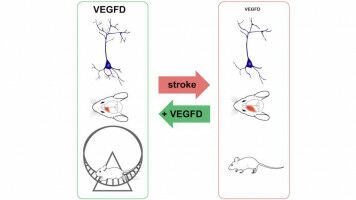
Protecting the Neuronal Architecture
Protecting nerve cells from losing their characteristic extensions, the dendrites, can reduce brain damage after a stroke. Neurobiologists from Heidelberg University have demonstrated this by means of research on a mouse model. The team, led by Hilmar Bading in cooperation with Junior Professor Dr Daniela Mauceri, is investigating the protection of neuronal architecture to develop new approaches to treating neurodegenerative diseases.
Life Sciences - 05.06.2020
Protecting nerve cells from losing their characteristic extensions, the dendrites, can reduce brain damage after a stroke. Neurobiologists from Heidelberg University have demonstrated this by means of research on a mouse model. The team, led by Hilmar Bading in cooperation with Junior Professor Dr Daniela Mauceri, is investigating the protection of neuronal architecture to develop new approaches to treating neurodegenerative diseases.
Life Sciences - 02.06.2020
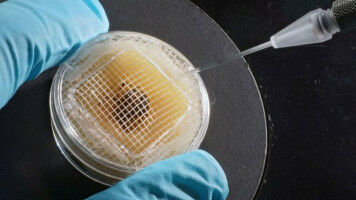
International research team proposes measures to increase the reproducibility of biomedical experiments For some scientific disciplines, such as medical or drug research, experiments with live animals are still indispensable. Scientists are aware of their responsibilities in this sensitive area and strive to keep the number of experiments as low as possible.
Life Sciences - 29.05.2020
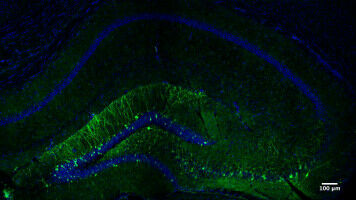
Selectively increasing the levels of a certain protein in nerve cells that play a key role in memory storage boosts memory performance, as demonstrated in experiments on mice by a group of scientists at Heidelberg University led by Dr Ana Oliveira. The responsible protein is Dnmt3a2 - a so-called epigenetic factor that chemically modifies the genome and thus influences memory processes.
Life Sciences - Health - 28.05.2020
Why developing nerve cells can take a wrong turn
Loss of ubiquitin-conjugating enzyme leads to impediment in growth of nerve cells / found between cellular machineries of protein degradation and regulation of the epigenetic landscape in human embryonic stem cells A group of scientists from CECAD, the Cluster of Excellence 'Cellular Stress Responses in Aging-Associated Diseases,' have found a mechanism by which neurodevelopmental diseases concerning neurons can be explained: The loss of a certai
Life Sciences - Chemistry - 26.05.2020
Enzymes: they are the central drivers for biochemical metabolic processes in every living cell, enabling reactions to take place efficiently. It is this very ability which allows them to be used as catalysts in biotechnology, for example to create chemical products such as pharmaceutics. A topic that is currently being widely discussed is photoinduced catalysis, in which researchers harness the ability of nature to start biochemical reactions with the aid of light.
Health - Life Sciences - 26.05.2020
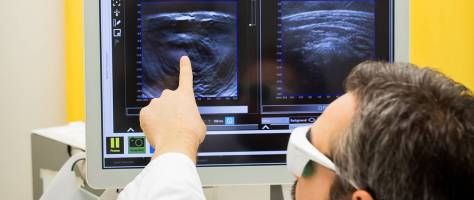
Breast cancer is the most common cancer in women. But individual tumors can vary significantly, presenting different spatial patterns within their mass. Researchers at the Technical University of Munich (TUM) and Helmholtz Zentrum München have now succeeded in visualizing spatial changes within tumors by means of optoacoustics.
Life Sciences - 20.05.2020
Research team from the University of Göttingen investigates the influence of storage on the flavour of ripe tomatoes There is much debate about the correct storage of tomatoes. There are two main options available to consumers: storage in the refrigerator or at room temperature. A research team from the University of Göttingen has now investigated whether there are differences in the flavour of ripe tomatoes depending on how they are stored and taking into account the chain of harvesting from farm to fork.
Life Sciences - Chemistry - 15.05.2020
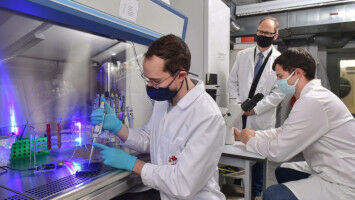
A research team from Jena, Munich and New York develops an active substance that controls an important component of the cytoskeleton with the help of light Light Life Photopharmacology investigates the use of light to switch the effect of drugs on and off. Now, for the first time, scientific teams from Jena, Munich, and New York have succeeded in using this method to control a component of cells that was previously considered inaccessible.
Health - Life Sciences - 13.05.2020
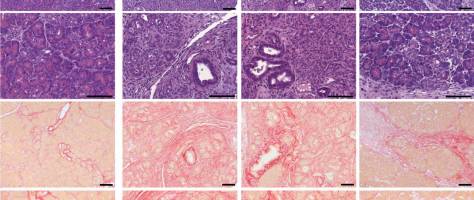
One factor contributing to the development of pancreatitis lies in mutations within a cell membrane ion channel that is characterized by its specific permeability for calcium ions. This groundbreaking discovery was made by a research team at Technical University of Munich (TUM), in cooperation with other groups from Germany, Japan and France.


