


news 2020
« BACK
 Newly discovered mechanism regulates myocardial distensibility
 CMOS chip projects ultrasound movies
 New Analytical Methods for Longer-Lasting Lithium-ion Batteries
 Hydrochloric acid boosts catalyst activity
 Battery Research Centre: new international research school opened
 Tellurium makes the difference
 Researchers solve a long-standing problem in organic chemistry
 Proteins Analysed, Volunteers Sought
 Rock ’n’ Control
 Enzymes as double agents: new mechanism discovered in protein modification
 Cosmic Waves
 How do bacteria build up natural products?
 New insights into lithium metal technology
 Operating with precision
 Chanterelle mushrooms as a taste enhancer
 Researchers create a photographic film of a molecular switch
 Triggered by light, a novel way to switch on an enzyme: Biotechnology
Chemistry
Results 21 - 40 of 50.
Health - Chemistry - 15.09.2020
Immunofluorescence staining of the muscle tissue of a chronically diseased human heart under the confocal microscope. Two proteins in the sarcomeres, which give the tissue the characteristic striation pattern, were marked with antibodies and visualized by different fluorophore-conjugated antibodies: titin appears red and actinin green; the nuclei were stained blue.
Chemistry - Physics - 14.09.2020
Scientists of the Micro, Nano and Molecular Systems Lab at the Max Planck Institute for Intelligent Systems and the Institute of Physical Chemistry at the University of Stuttgart have developed a digital chip that can be used to project movies with ultrasound. The researchers report on this in an article in the magazine "Nature Communications".
Materials Science - Chemistry - 03.09.2020
How can the lithium-ion battery (LIB) be further improved? To answer this question, MEET scientists around Lenard Hanf developed new methods for capillary electrophoresis. For the first time, this enables a detailed analysis of the transition metal dissolution from LIB cathode materials or the current collector - such as manganese or copper.
Chemistry - Environment - 25.08.2020
Hydrochloric acid treatment improves catalysts for removing sulfur from crude oil A research team from the Technical University of Munich (TUM) led by chemist Johannes Lercher has developed a synthesis process which drastically increases the activity of catalysts for the desulfurization of crude oil.
Materials Science - Chemistry - 05.08.2020
Longer ranges for electric vehicles and the effective storage of electricity from renewable energies - these are research topics for the future which PhD students in Münster will be working on in a new international Graduate School. The research centre for "Battery Chemistry, Characterization, Analysis, Recycling and Application" (BACCARA for short) was officially opened on August 5 at the MEET Battery Research Centre at the University of Münster.
Chemistry - Physics - 05.08.2020
International research team discovers unusual molecular structures The periodic system contains 118 chemical elements. However, only a few of them, such as hydrogen, carbon, nitrogen, oxygen and silicon, are of major importance in our daily lives. But things become really exciting from a chemical point of view when less well-known elements are involved.
Chemistry - Pharmacology - 16.07.2020
Chemists at the University of Münster develop a bioinspired strategy for the controlled synthesis of polyenes / Study published in "Science" They occur in nature, are reactive and play a role in many biological processes: polyenes. It is no wonder that chemists have for a long time been interested in efficiently constructing these compounds - not least in order to be able to use them for future biomedical applications.
Chemistry - Materials Science - 14.07.2020
New method enables a view inside batteries
The Solid Electrolyte Interphase (SEI) inside both lithium-ion and lithium metal batteries is indispensable for successful battery cell operation and at the same time an analytical challenge. Up to now, its analysis has only been possible to a limited extent; knowledge about formation, composition, growth or reactions is incomplete.
Life Sciences - Chemistry - 09.07.2020
A research team led by zoologist Dr Amy MacLeod has been using drones to count marine lizards on the Galapagos Islands. The aim of the Leipzig University project is to determine the colony sizes of this vulnerable species and, with the help of volunteers, to precisely locate them - in order to ultimately be able to better protect the iguanas.
Physics - Chemistry - 08.07.2020
Göttingen Physicists use oscillations of atoms to control a phase transition The goal of -Femtochemistry- is to film and control chemical reactions with short flashes of light. Using consecutive laser pulses, atomic bonds can be excited precisely and broken as desired. So far, this has been demonstrated for selected molecules.
Life Sciences - Chemistry - 07.07.2020
Proteins are the workers in a cell and, as the "basic element of life", are responsible for the most widely varying metabolic processes. In plants, for example, they take on an important function in photosynthesis. In order to be able to work purposefully, proteins change their chemical form after they have been produced in a cell - for example, through protein acetylation, when an acetyl group is transferred to the protein.
Chemistry - 06.07.2020
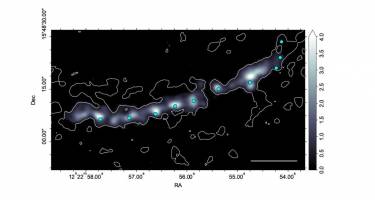
The molecular gas in galaxies is organised into a hierarchy of structures. It moves along filament-like orbits to centres of gas and dust where it is compressed into stars and planets. To better understand this, an international team of astronomers led by Dr Jonathan Henshaw from the Max Planck Institute for Astronomy and Dr Diederik Kruijssen from the Center for Astronomy at Heidelberg University examined gas movements on various size scales.
Life Sciences - Chemistry - 06.07.2020
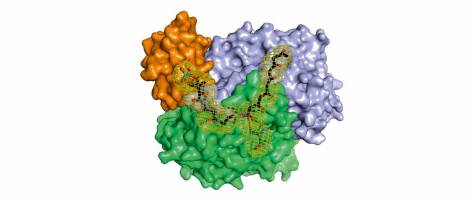
X-ray structure analysis gives detailed insights into molecular factory The active agents of many drugs are natural products, so called because often only microorganisms are able to produce the complex structures. Similar to the production line in a factory, large enzyme complexes put these active agent molecules together.
Chemistry - Materials Science - 02.07.2020
It is one of the key technologies for high-performance batteries of the future: the lithium metal battery (LMB). Designed for instance as solid-state battery with polymer electrolyte, it promises a significantly higher energy density than the currently common lithium-ion battery (LIB). However, it is not yet fully developed for the final commercial breakthrough and is therefore currently used by only a few pilot projects.
Life Sciences - Chemistry - 02.07.2020
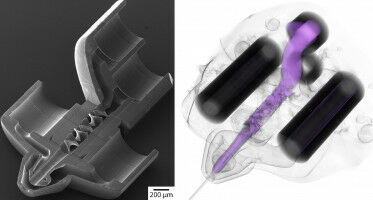
While miniaturization is already well advanced in electrical engineering, analysis and process technology in medicine and biochemistry still fills entire laboratories. Researchers from the University of Stuttgart and the Center for Free-Electron Laser Science (CFEL) in Hamburg have now developed a method which enables a laboratory to be reduced to the size of the tip of a needle.
Chemistry - 30.06.2020
New method for quality control of chanterelle mushrooms Chanterelles give savoury dishes a rich body and a unique complex flavour. Experts refer to this as the kokumi effect. A research team from the Technical University of Munich (TUM) and the Leibniz-Institute for Food Systems Biology recently developed the first method to clearly quantify chanterelle-specific key substances that contribute to this effect.
Chemistry - Physics - 18.06.2020
Molecular switches - they are the molecular counterparts of electrical switches and play an important role in many processes in nature. Such molecules can reversibly interconvert between two or more states and thereby control molecular processes. In living organisms, for example, they play a role in muscle contraction but also our visual perception is based on the dynamics of a molecular switch in the eye.
Astronomy & Space - Chemistry - 16.06.2020
If there is life out there, can we detect it?
Scientists at Freie Universität Berlin publish two experimental studies in journal Astrobiology No 101/2020 from Jun 16, 2020 Instruments on-board future space missions are capable of detecting amino acids, fatty acids, and peptides, and even identify ongoing biological processes on ocean moons in our Solar System.
Health - Chemistry - 29.05.2020
Three Successful Funding Bids for Collaborative Research Centres
Heidelberg University succeeded in gaining funding from the German Research Foundation (DFG) in the latest approval round for three, internationally visible collaborative research centres. In physics, the collaborative research centre (CRC) studying isolated quantum systems in experimental and theoretical investigations will continue its work in the second funding period (CRC 1225).
Life Sciences - Chemistry - 26.05.2020
Enzymes: they are the central drivers for biochemical metabolic processes in every living cell, enabling reactions to take place efficiently. It is this very ability which allows them to be used as catalysts in biotechnology, for example to create chemical products such as pharmaceutics. A topic that is currently being widely discussed is photoinduced catalysis, in which researchers harness the ability of nature to start biochemical reactions with the aid of light.


