University of Münster participates in the new "Centre for Molecular Water Science"
One of the scientists’ goals is to investigate the solubility of valuable metals such as gold or rare earth elements in supercritical aqueous fluids under the high-pressure and high-temperature conditions of the Earth’s interior. Rare earths are indispensable for modern technologies-they are used in smartphones, batteries for electric cars, and wind turbines. "We want to understand how and where these deposits form in the Earth’s interior," emphasizes Stephan Klemme. Many of these metals are considered "critical" in terms of supply by the EU, especially given China’s dominance in the global market, as highlighted by a study from the German Mineral Resources Agency.
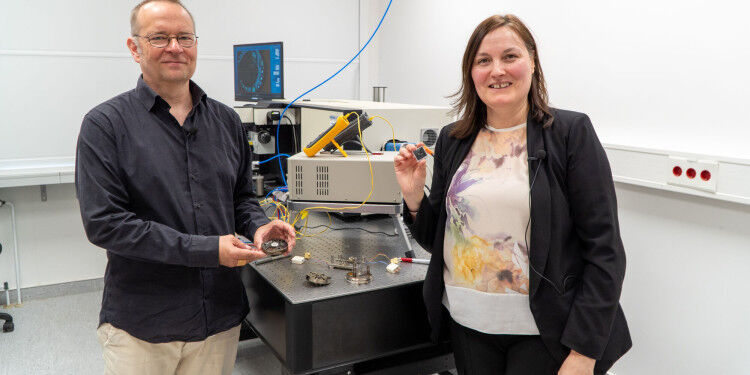
The researchers use innovative high-pressure apparatus that are developed and built in-house at the Institute’s own workshop. "In special diamond anvil cells, we compress water together with metals, oxides, and other minerals, then heat the mixture to up to 800 degrees Celsius to generate supercritical fluids. These samples are then analyzed with high-energy X-rays to determine which metals and other chemical elements can be dissolved and transported under these conditions," explains Carmen Sanchez Valle. "We simulate natural conditions in the lab as realistically as possible, since it is impossible to drill deep enough into the Earth to study these regions directly."
Studying the molecular properties of water and its role in geological processes helps scientists not only to better understand how ore deposits form, but also to develop predictive models for the formation of economically relevant mineral resources. Carmen Sanchez Valle summarizes the basic research in this area: "This knowledge is crucial to securing critical element resources for the future."
The ’Centre for Molecular Water Science’:
The Centre for Molecular Water Science (CMWS) is a European research network dedicated to molecular water science. Currently, more than 60 research institutions and universities are involved, with over 55 from Europe. The researchers represent disciplines including physics, geosciences, chemistry, biology, medicine, nanotechnology, and engineering. The hub of the CMWS initiative is the Deutsches Elektronen-Synchrotron (DESY) in Hamburg. With world-leading large-scale facilities, interdisciplinary centers, and specialized campus partners, DESY provides an ideal environment to make CMWS an international beacon of molecular water science. The initiative defines five strategic research areas: (1) fundamental properties of water, (2) climate, astroand geosciences, (3) energy research and technology, (4) chemical dynamics in real time, and (5) molecular biosciences. These five areas form the basis of CMWS’s cross-disciplinary research, linking fundamental science to applied research.
This article was originally published in the university newspaper wissen