To the point
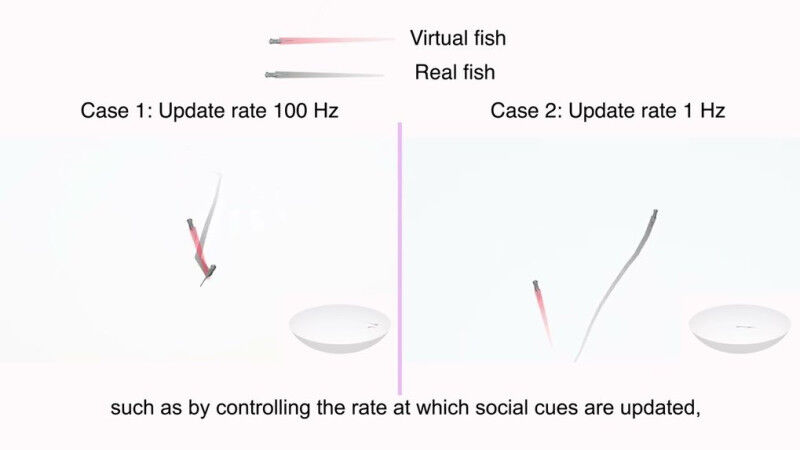
- Innovative method: A team of biologists and robotic engineers have developed a virtual reality system for fish to decipher how they school
- Discovering nature-s algorithm: They uncovered the natural -control lawthat is used by zebrafish to coordinate behavior with others, a behavioral algorithm that has been tuned over millennia to facilitate effective collective motion.
- Implications for robotics: They tested the natural control law in groups of robotic cars, drones and watercraft, demonstrating its potential for the control autonomous vehicles in the future.
Fish are masters of coordinated motion. Schools of fish have no leader, yet individuals manage to stay in formation, avoid collisions, and respond with liquid flexibility to changes in their environment. Reproducing this combination of robustness and flexibility has been a long-standing challenge for human engineered systems like robots. Now, using virtual reality for freely-moving fish , a research team based in Konstanz has taken an important step towards that goal.
-Our work illustrates that solutions evolved by nature over millennia can inspire robust and efficient control laws in engineered systems,- said first author Liang Li from the University of Konstanz. Co-author Máté Nagy from Eötvös University underscores this: -The discovery opens up exciting possibilities for future applications in robotics and autonomous vehicle design.-
Deciphering nature-s hidden algorithm
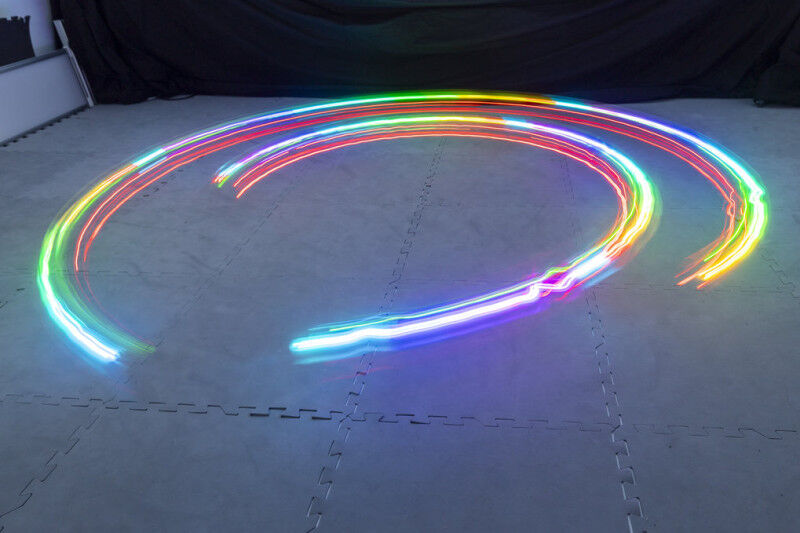
To test the broader utility of their discovery, the team embedded it in swarms of robotic cars, drones, and boats. The robots were tasked with following a moving target using either parameters from the zebrafish algorithm or from a state-of-the-art method used in autonomous vehicles called Model Predictive Controller (MPC). Across all tests, the natural control law that fish have evolved delivered performance that was nearly indistinguishable from MPC in terms of accuracy and energy consumption-but at a fraction of the complexity.
Oliver Deussen, a co-author on the study and Professor in computer science at the University of Konstanz and Speaker at the Excellence Cluster Collective Behaviour: -This work highlights the reciprocal relationship between robotics and biology - using robotics to explore biological mechanisms, which in turn can inspire new and effective robotic control strategies.-