







news
University of Tübingen
Results 121 - 140 of 152.
Paleontology - Life Sciences - 02.03.2022

Palaeobiologists from the University of Tübingen have described a previously unknown turtle species that lived in what is now Romania some 70 million years ago. The reptile, measuring 19 cm in length, has no close relatives now but is a member of the larger group of side-necked turtles that are today found mostly in the southern hemisphere.
Earth Sciences - Life Sciences - 23.02.2022

At the mouth of the Rio Tinto in southwestern Spain, acidic river water - polluted with heavy metals from ore mining and mineral weathering - mixes with the salt water of the Atlantic Ocean. Here, microorganisms that love such extreme conditions form a unique community. They live in water as acidic as vinegar, are resistant to high salinity, and some also cope very well with high levels of toxic metals.
Life Sciences - Innovation - 16.02.2022

Basic skills for using stone tools may be more widespread among primates than we previously thought: A study led by researchers from the University of Tübingen in collaboration with the Max Planck Institute of Evolutionary Anthropology in Leipzig and the University of Barcelona shows that orangutans spontaneously recognize and use human-made sharp stones as cutting tools.
Astronomy & Space - 14.02.2022

Astronomers from the Universities of Tübingen and Potsdam have discovered a new type of star. While hunting for "hot stars" with the Large Binocular Telescope in Arizona, the team came across stars with unusual properties. While normal stellar surfaces are composed of hydrogen and helium, these stars, found under the direction of Professor Klaus Werner of the University of Tübingen, are covered in carbon and oxygen - the ash of a helium nuclear fusion.
Materials Science - 21.12.2021

The tropical floating fern Salvinia molesta has developed sophisticated structures to allow water to roll off its leaves quickly - even during heavy rainfall. This relieves the pressure on the leaves floating on the water surface, but even more importantly, it keeps the stomata open for air exchange.
Health - Pharmacology - 13.10.2021

Antibiotics help us to treat bacterial infections and save millions of lives each year. But they can also harm the helpful microbes residing in our gut, weakening one of our body's first lines of defence against pathogens and compromising the multiple beneficial effects our microbiota has for our health.
Paleontology - Earth Sciences - 11.10.2021

The oldest known footprints of pre-humans were found on the Mediterranean island of Crete and are at least six million years old, says an international team of researchers from Germany, Sweden, Greece, Egypt and England, led by Tübingen scientists Uwe Kirscher and Madelaine Böhme of the Senckenberg Center for Human Evolution and Palaeoenvironment at the University of Tübingen.
Life Sciences - Chemistry - 05.10.2021

An international research team led by Professor Stephanie Grond from the Institute of Organic Chemistry at the University of Tübingen has found that the natural substance collinolactone reduces artificially-induced stress on nerve cells, protecting them from the kind of damage that occurs in neurodegenerative diseases.
Paleontology - Environment - 31.08.2021

A new study of two approximately 52-million-year-old fossil finds from the Green River Formation in Wyoming, USA, has fitted them into the evolutionary history of crocodiles. Biogeologists Jules Wal-ter, Dr. Márton Rabi of the University of Tübingen, working with some other colleagues, determined the extinct species Tsoabichi greenriverensis to be an early caiman crocodile.
Health - 03.08.2021
Study tracks global death toll of COVID-19 pandemic
Comparing the impact of COVID-19 between countries or during a given period of time is challenging because reported numbers of cases and deaths can be affected by testing capacity and reporting policy. The current study provides a more accurate picture of the effects of COVID-19 than using these numbers, and may improve our understanding of this and future pandemics.
Health - Life Sciences - 30.07.2021

Some cases of bloodstream infections are mild, but many have a fatal outcome - the reasons for these differences have remained in the dark despite decades of research. Researchers from the Cluster of Excellence "Controlling Microbes to Fight Infections" (CMFI), the Interfaculty Institute of Microbiology and Infection Medicine Tübingen (IMIT) at the University of Tübingen and the German Center for Infection Research (DZIF) have now discovered a possible cause and on this basis developed a new experimental strategy to combat bacterial sepsis.
History & Archeology - 22.07.2021

65,000 years ago Neanderthal from the Swabian Jura hunted horses and reindeer with hafted leaf-shaped stone points. A newly discovered leaf point from the UNESCO World Heritage site of Hohle Fels Cave documents the evolution of hunting. A team under the direction of Professor Nicholas Conard for the University of Tübingen and the Senckenberg Centre for Human Evolution and Palaeoenvironment in southern Germany recovered the artifact underlying a layer dating to 65,000 years ago, which represents a minimum age for the find.
Environment - Life Sciences - 08.07.2021

Climatic changes are increasingly giving rise to major fires on peatlands in the northern hemisphere, which release massive quantities of carbon dioxide. However, the biomass of the peatland is not entirely consumed by fire, some turns to charcoal in the absence of air. Now, Dr. Tianran Sun and Professor Lars Angenent from Environmental Biotechnology at the University of Tübingen in cooperation with colleagues at Cornell University in the USA have discovered that the carbonized biomass reduces production of the methane gases naturally occurring in the peat soil.
Earth Sciences - 05.07.2021

The Tübingen region has recently seen hailstorms that brought back memories of the devastating storm of 2013. At that time, billions of dollars in damage were caused, and the damage from the most recent storms is still being assessed. Despite all the trouble hailstones cause, they also possess a previously unknown inner beauty.
Earth Sciences - 24.06.2021

From a human perspective, earthquakes are natural disasters - in the past hundred years, they have caused more than 200,000 deaths and enormous economic damage. Mega-earthquakes with a magnitude of nine or higher on the Richter scale are considered a particular threat. Yet the inconceivable energy released in these events doesn't seem to affect the uplift of mountains, according to a new study by geoscientists at the University of Tübingen.
Environment - Life Sciences - 07.06.2021

One of the most striking features of global warming is that the life rhythms of plants are changing all over the world. A study at the University of Tübingen has found that human land use can also significantly influence the pace of plant life cycles. In a comparative study, a research team from the Plant Evolutionary Ecology group surveyed one hundred forest sites of different management intensities.
Health - Life Sciences - 25.05.2021

The bacterium Staphylococcus epidermidisis primarily a harmless microbe found on the skin and in the noses of humans. Yet some strains of this species can cause infections - in catheters, artificial joints, heart valves, and in the bloodstream - which are difficult to treat. These bacteria are often resistant to a particularly effective antibiotic, methicillin, and are among the most feared germs in hospitals.
History & Archeology - 25.05.2021
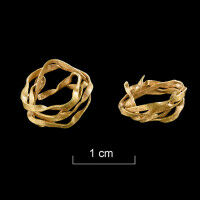
Archaeologists working in the district of Tübingen in southwest Germany have discovered the region's earliest gold object to date. It is a spiral ring of gold wire unearthed in autumn 2020 from the grave of an Early Bronze Age woman. It is about 3,800 years old, according to analyses. Precious metal finds from this period are very rare in southwestern Germany.
Life Sciences - Environment - 18.05.2021
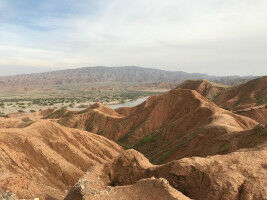
The formation of deserts on the Arabian Peninsula had a decisive impact on the migration and evolution of large mammals and our human ancestors over millions of years. That is the conclusion of a new study by an international research team led by Professor Madelaine Böhme of the Senckenberg Centre for Human Evolution and Palaeoenvironment at the University of Tübingen.
Life Sciences - 06.04.2021
Neanderthal Ancestry Identifies Oldest Modern Human Genome
In an article published in Nature Ecology & Evolution , an international team of researchers sequence the genome of an almost complete skull first discovered in ZlatÃoe Kůň, Czechia in the early 1950s and now stored in the National Museum in Prague. The segments of Neanderthal DNA in its genome were longer than those of the Ust-Ishim individual from Siberia, the previous oldest modern human sequenced, suggesting modern humans lived in the heart of Europe more than 45,000 years ago.


