








news
University of Münster
Results 241 - 260 of 363.
Chemistry - Physics - 18.06.2020

Molecular switches - they are the molecular counterparts of electrical switches and play an important role in many processes in nature. Such molecules can reversibly interconvert between two or more states and thereby control molecular processes. In living organisms, for example, they play a role in muscle contraction but also our visual perception is based on the dynamics of a molecular switch in the eye.
Physics - Astronomy & Space - 17.06.2020

Scientists from the international XENON collaboration under participation of the University of Münster announced today that data from their XENON1T, the world's most sensitive dark matter experiment, show a surprising excess of events. The scientists do not claim to have found dark matter. Instead, they say to have observed an unexpected rate of events, the source of which is not yet fully understood.
Life Sciences - 16.06.2020

How do animals adapt their behaviour during life in order to assure survival and reproduction? This is a question of great interest for behavioural biologists worldwide. An essential step is to examine hormonal mechanisms which have a fundamental impact on the animal's behaviour and thus make adaptations to various social situations possible.
Psychology - Social Sciences - 15.06.2020

Following the rapid spread of COVID-19 in Europe and North America in March 2020, many people around the world began hoarding goods such as toilet paper. Some companies reported an increase in toilet paper sales of up to 700 percent, despite calls from governments to refrain from "panic buying". Which groups of people primarily hoarded all the toilet paper? Psychologists from the universities of St. Gallen and Münster and the Max Planck Institute for Evolutionary Anthropology in Leipzig investigated this question.
Physics - 12.06.2020

A mysterious cloud containing radioactive ruthenium-106, which moved across Europe in autumn 2017, is still bothering Europe's radiation protection entities. Although the activity concentrations were innocuous, they reached up to 100 times the levels of what had been detected over Europe in the aftermath of the Fukushima accident.
Earth Sciences - 11.06.2020

Geoscientists show that it is not erosion but an equilibrium of forces in the Earth's crust that controls the "growth" of mountains / Study in "Nature" Which forces and mechanisms determine the height of mountains? Researchers at the University of Münster and the German Research Centre for Geoscience (GFZ) in Potsdam have now found a surprising answer: It is not erosion and weathering of rocks that determine the upper limit of mountain belts, but rather an equilibrium of forces in the Earth's crust.
Life Sciences - Health - 10.06.2020

Experiments on zebrafish: fibroblasts produce important enzyme-processing proteins triggering growth in vessels / Study in "Nature Communications" When an embryo develops, a wide variety of proteins and enzymes trigger a series of biochemical reactions. The development of the lymphatic vasculature is crucially dependent on one specific protein - the growth factor VEGF-C.
Pharmacology - Health - 05.06.2020

Cystic fibrosis is the most frequent severe inherited disorder worldwide. Every year, hundreds of families are confronted with this diagnosis - and to date, there is no cure for this disease that mainly affects the respiratory system. Besides supportive treatments, a lung transplant is often the only option to save a patient's live.
Life Sciences - 05.06.2020

Metabolic processes are especially complex in plants due to their obligate sessile life style - which is why scientists discover more and more new and surprising connections that occur within their cells. An important metabolic route that has occupied plant scientists for decades is the so-called oxidative pentose-phosphate pathway by which carbohydrates are converted to reduction power.
Life Sciences - Chemistry - 26.05.2020

Enzymes: they are the central drivers for biochemical metabolic processes in every living cell, enabling reactions to take place efficiently. It is this very ability which allows them to be used as catalysts in biotechnology, for example to create chemical products such as pharmaceutics. A topic that is currently being widely discussed is photoinduced catalysis, in which researchers harness the ability of nature to start biochemical reactions with the aid of light.
History & Archeology - 25.05.2020

As journalists traditionally say: real-life stories are the best ones. In the case of Dr. Daniel Stracke, 46, an historian and research assistant, his real-life story presented itself in the corridor of the Institute of Comparative Urban History (Institut für vergleichende Städtegeschichte, IStG) at the University of Münster.
Physics - 12.05.2020

Laser light that cannot be seen, and sounds that cannot be heard: for partygoers this would probably conjure up some boring event - but it brings a sparkle to the eyes of many a researcher. It is precisely this combination that produces something that is all the more visible - images from inside the body that provide information on the processes taking place there.
Chemistry - Materials Science - 27.04.2020

In addition to high purchase costs and the still underdeveloped charging infrastructure, the limited range is one of the biggest obstacles to switching to electric vehicles. Industry and science are therefore working intensively on developing batteries with a higher energy density and making them suitable for series production.
Physics - Electroengineering - 24.04.2020

Data transmission that works by means of magnetic waves instead of electric currents - for many scientists, this is the basis of future technologies that will make transmission faster and individual components smaller and more energy-efficient. Magnons, the particles of magnetism, serve as moving information carriers.
Physics - Materials Science - 14.04.2020

Production of minute structures with gold and silicon ions / 840,000 euros from the German Research Foundation and the state of North Rhine-Westphalia Investigating and developing nanosystems - i.e. structures which are a thousand times smaller than the diameter of a human hair - is something which occupies researchers collaborating from a variety of disciplines at the University of Münster.
Materials Science - Physics - 24.03.2020
In the production of compounds, chemists have the fundamental goal of finding strategies that are most selective and avoid waste products. Breakthroughs in this area serve, among other things, to drive industrial innovation and drug development. In this context, allylic substitution reactions using catalysts made of so-called transition metals have already led to significant advances in science.
Health - 20.03.2020

More and more, people are using internet forums as first place to look for information on health issues. However, the scientific medical information being provided there is often so complex that laypeople are barely able to form considered judgements on the content of much of the advice. One criterion which users apply instead in evaluating the information is the style of the language used.
Chemistry - Computer Science - 17.03.2020
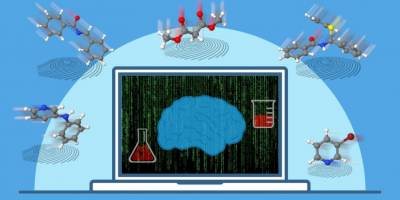
Everyday life without artificial intelligence is barely conceivable in today's world. Countless applications in areas such as autonomous driving, foreign language translations or medical diagnostics have found their way into our lives. In chemical research, too, great efforts are being made to apply artificial intelligence (AI), also known as machine learning, effectively.
Computer Science - Life Sciences - 19.02.2020

The reproducibility of research results is one of the fundamental quality criteria in science. The demand for transparency of the scientific knowledge process aims to ensure the repeatability of scientific studies or experiments. The project "Opening Reproducible Research" (o2r) of the Institute for Geoinformatics of the University of Münster and the University and State Library of Münster deals with this topic.
Astronomy & Space - Environment - 17.02.2020

Planetologists from Münster University show that the meteorite contains minerals that formed under the presence of water on small planetesimals in the early history of our solar system. A fireball in the sky, accompanied by a bang, amazed hundreds of eyewitnesses in northern Germany in mid-September last year.


