






news
Friedrich Schiller University Jena
Results 1 - 20 of 236.
Environment - 18.03.2026
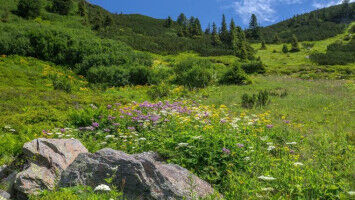
Biological communities in Europe are responding to climate change in markedly different ways, with clear contrasts between ecosystems, according to a new study published in Nature. Cold-adapted plant species in mountain regions are declining especially quickly, while plant communities in forests and grasslands are changing more slowly.
Environment - 17.03.2026

Bird communities in forests change significantly over the course of the year. Nevertheless, the differences between various forest types remain clearly discernible across the seasons. This is shown by a new study conducted by researchers from Friedrich Schiller University Jena, the German Centre for Integrative Biodiversity Research (iDiv) and the Northwest German Forest Research Institute.
History & Archeology - Social Sciences - 02.03.2026

A new interdisciplinary study published in Nature Communications provides the first detailed insights from a biomolecular and archaeological perspective into the lives of people in Central Europe during the Late Bronze Age (ca. BC), also known as the Urnfield Period. This period was characterised by cultural changes, such as the widespread and eponymous introduction of cremation burial.
Life Sciences - Health - 26.02.2026
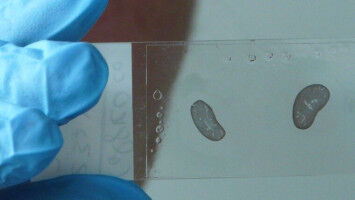
A functional disorder of the kidneys, usually caused by a genetic defect, leads to hyperacidity of the blood, which in turn impairs the recovery of important nutrients and minerals from the urine. An international research team led by Jena University Hospital has now been able to elucidate this disease mechanism in more detail, thereby contributing to a better understanding of chronic kidney failure, which is also associated with hyperacidity in its advanced stages.
Environment - 18.02.2026

Species numbers alone do not fully capture how ecosystems are changing. In a global study led by researchers from the German Centre for Integrative Biodiversity Research (iDiv), the Martin Luther University Halle-Wittenberg (MLU), and the Friedrich Schiller University Jena, scientists analysed long-term data from nearly 15,000 marine and freshwater fish communities.
Environment - Life Sciences - 04.02.2026
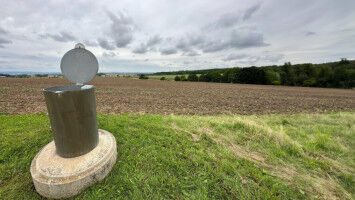
Groundwater is considered the largest reservoir of liquid freshwater on Earth and a habitat for complex microbial communities that drive essential biogeochemical cycles. Until now, the role of viruses that infect microorganisms in this hidden ecosystem was largely unknown.
Astronomy & Space - 20.01.2026
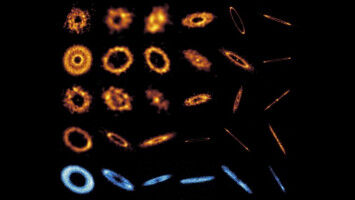
Many planetary systems consist not only of a central star and the planets orbiting it, but also of so-called debris disks. These regions contain small bodies such as asteroids, as well as large amounts of dust that is produced when rocky objects collide with one another. In our own Solar System, for example, beyond the orbit of Neptune lies the so-called Kuiper Belt, where larger debris is gradually ground down into dust.
Life Sciences - Health - 17.12.2025
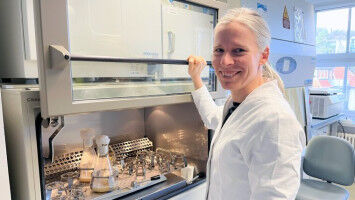
A research team at the Leibniz Institute for Natural Product Research and Infection Biology (Leibniz-HKI) and Friedrich Schiller University Jena describes a new enzyme in the journal »Angewandte Chemie International Edition« that renders the highly toxic molecule malleicyprol harmless. Malleicyprol is considered an important virulence factor of Burkholderia bacteria, which cause, among other things, the dangerous tropical disease melioidosis.
Environment - 02.12.2025

More than 90 percent of local insect biomass decline in German grasslands is explained by species loss, according to a new study published in »Nature Ecology & Evolution«. The research draws on 11 years of data from two long-term research programmes where the scientists counted and identified arthropods-insects and spiders-then measured their biomass.
Environment - History & Archeology - 12.11.2025
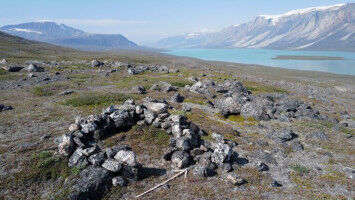
For thousands of years, the lives of many Inuit on Greenland were characterized by a regular rhythm: during the winter, they fished along the coast and hunted whales, seals and other marine mammals; in the summer, they moved inland and hunted caribou (reindeer).
Life Sciences - Environment - 07.11.2025
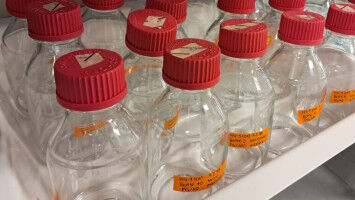
A research team from the Cluster of Excellence »Balance of the Microverse« at the University of Jena has, for the first time, systematically enriched a broad range of groundwater bacteria from the traditionally culture-intractable Candidate Phyla Radiation. The study, published in the journal Microbiome, revealed a surprising adaptability of this bacterial group.
Life Sciences - Health - 28.10.2025
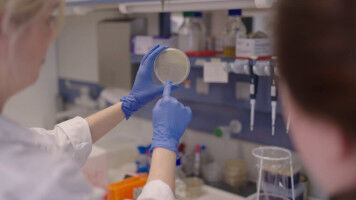
Researchers at the Cluster of Excellence "Balance of the Microverse" at the University of Jena have discovered a previously unknown survival mechanism in bacteria. They found that the freshwater bacterium Caulobacter crescentus can change its nutritional strategy in a matter of seconds with the help of a special 'RNA sponge'.
Environment - Earth Sciences - 13.10.2025

Groundwater commonly contains methane, but the amount of this important greenhouse gas that can escape to surface waters or the atmosphere is highly uncertain A team from the Max Planck Institute for Biogeochemistry and University of Jena has shown that microbes in groundwater significantly reduce methane emissions, as revealed in a new study published in PNAS.
Health - Life Sciences - 26.09.2025
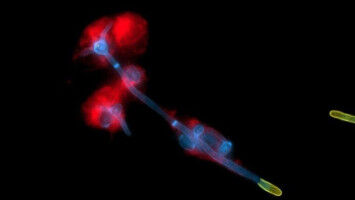
The yeast fungus Candida albicans not only uses the toxin candidalysin to cause infections, but also to colonize the oral mucosa inconspicuously-but only in finely balanced amounts. Too little toxin prevents oral colonization, too much triggers the immune system and leads to an inflammatory defense reaction, as an international research team from Zurich, Jena, and Paris discovered.
Life Sciences - Chemistry - 24.09.2025
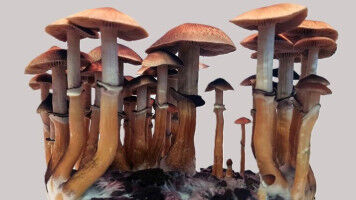
A German-Austrian team led by Friedrich Schiller University Jena and Leibniz-HKI has been able to biochemically demonstrate for the first time that different types of mushrooms produce the same mind-altering active substance, psilocybin, in different ways. Both Psilocybe mushrooms and fiber cap mushrooms of the genus Inocybe produce this substance, but use completely different enzymes and reaction sequences for this process.
Environment - Life Sciences - 16.09.2025
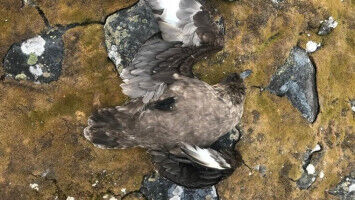
A team from the University of Jena has now confirmed a feared trend: after the H5N1 avian influenza (bird flu) virus was detected on the sub-Antarctic island of South Georgia in October 2023 and subsequently on James Ross Island in Antarctica in February 2024, researchers led by Christina Braun documented signs of the highly pathogenic variant also occurring on the Fildes Peninsula on King George Island for the first time during their most recent expedition in 2025.
Environment - 20.08.2025
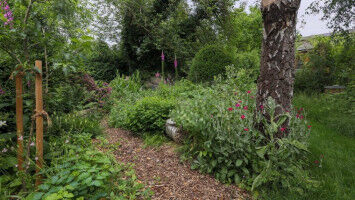
A research team from the Institute of Ecology and Evolution at Friedrich Schiller University Jena has developed an easy-to-use, free self-test for garden owners to assess the ecological quality of their garden and identify areas for improvement. The researchers presented their garden biodiversity index in the journal ,, Landscape and Urban Planning ".
Physics - Chemistry - 17.07.2025

A few years ago, chemists at Friedrich Schiller University Jena developed a molecule that can function as a potential qubit-i.e. as a computing unit in a quantum computer. With the help of this copper complex, they have now enormously increased the possibilities for future developments in quantum technology together with colleagues from the University of Florence.
Environment - 09.07.2025

A new paper published in Nature Communications reveals how the way tree species are arranged in a forest can help optimise ecosystem functioning and productivity. The study was conducted using empirical field data combined with advanced computer models and simulations by researchers at the German Centre for Integrative Biodiversity Research (iDiv), Leipzig University, Friedrich Schiller University Jena, and the French National Centre for Scientific Research (CNRS).
Environment - 08.07.2025

Participants can accurately recognise levels of biodiversity through sight and sound, and aspects like colour, light as well as bird song matter. This has been confirmed by a recent study published in the journal People and Nature. According to this, both visual and acoustic stimuli influence our perception of biodiversity.


