










news
Max Plank Society
Results 41 - 60 of 484.
Environment - Life Sciences - 15.10.2025
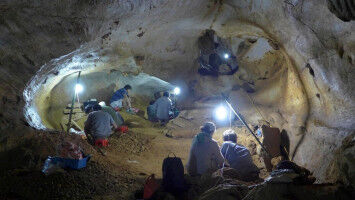
Ancient teeth reveal mammalian responses to climate change in Southeast Asia over the last 150,000 years Isotopic Analysis: A new study shows that ancient mammals' dietary flexibility influenced their survival during climate changes over the past 150,000 years in Southeast Asia. Research Findings: The study analyzed 141 fossil teeth and found that animals with varied diets survived better, while specialists with narrow diets went extinct.
Life Sciences - Health - 13.10.2025

Length of post-reproductive life span: seven out of the 25 study females qualified as post-reproductive, exhibiting a post-reproductive life span of at least ten years Female ages: Six of the seven post-reproductive females were older than 35 years, which is the maximum age of observed reproduction Mating decline: Post-reproductive females were not observed mating for an average of 7.5 years before they exit the study New research from th
Life Sciences - Health - 10.10.2025
Brain disease in children and Parkinson’s disease in adults are linked
Cellular Process: The EPG5 gene is crucial for autophagy, a process where cells remove damaged components. Disruptions in this gene impair the cell's ability to clear these components, contributing to neurological diseases. Gene Link: Errors in the EPG5 gene cause a rare neurodevelopmental disorder in infants and are also linked to Parkinson's disease in later life.
Astronomy & Space - Physics - 09.10.2025
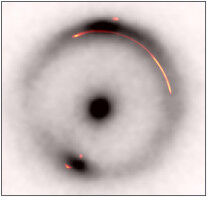
Gravitational lenses: Distortions caused by gravitational lenses can be used to study the properties of dark matter, even though it does not emit light. Discovery: An international team has discovered a dark object in the distant universe that has one million times the mass of the Sun. The discovery is based on an analysis of the gravitational effects on the light from another galaxy.
Life Sciences - Environment - 01.10.2025
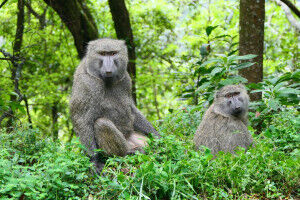
Mammals vs birds: Among the 1,176 species studied, female mammals live on average 13 percent longer than males, while among birds, males live about five percent longer than females. Mating strategies play a role: In species with strong competition for mates - as is the case with most mammals - males die earlier.
Health - Life Sciences - 26.09.2025
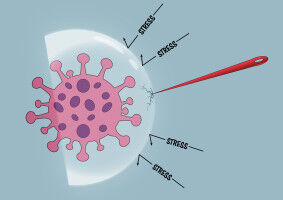
Max Planck chemists develop novel substance with unique inhibition mode targeting the unfolded protein response highjacked by cancer cells Cancer cells: A novel substance disrupts stress management in cancer cells. This substance targets the protein IRE1, which is crucial for the survival of cancer cells.
Environment - 25.09.2025
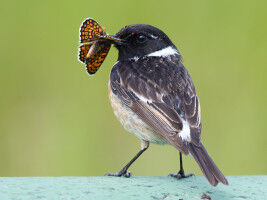
Global study reveals why some animals shine bright and others disappear in plain sight Conspicuous or camouflaged: Animals use conspicuous colours or camouflage to protect themselves from predators. A new study examines the factors that influence these decisions. Influence of the environment: The predator community and habitat influence whether camouflage or warning colours are more successful.
Environment - 21.09.2025
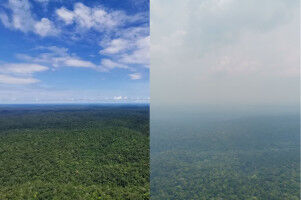
Global climate change and local deforestation affect the rainforest ecosystem in different ways New study quantifies climatic changes in the rainforest due to local deforestation and global climate change quantified separately Data show that deforestation is the main cause, accounting for 75 percent, of the decline in precipitation by 21-millimeter during the dry season since 1985.
Life Sciences - 18.09.2025

A new study by the Max Planck Institute for Evolutionary Biology in Plön and the Biomedical Pioneering Innovation Center at Peking University in Beijing, China, shows that our organs form a mosaic of sex-specific characteristics - far removed from the strict division into -maleand -female-. Only sexual organs show clear separation: In all'other organs, male and female gene activity patterns overlap.
Computer Science - 17.09.2025

When people delegated tasks to machine agents-whether voluntarily or in a forced manner-they were more likely to cheat Delegation to AI can induce dishonesty : When people delegated tasks to machine agents-whether voluntarily or in a forced manner-they were more likely to cheat. Dishonesty varied with the way in which they gave instructions, with lower rates seen for rule-setting and higher rates for goal-setting (where over 80 percent of people would cheat).
Astronomy & Space - Physics - 12.09.2025

A new class of supermassive black holes embedded in a thick gas shell could explain small red dots in images from the James Webb Space Telescope The James Webb Space Telescope and its infrared cameras are specialized for looking deep into the universe, even at the most distant and oldest objects. One characteristic of such galaxies is that they appear particularly reddish, and the further away they are, the smaller they become.
Astronomy & Space - Physics - 10.09.2025

The LIGO-Virgo-KAGRA collaboration and the Max Planck Institute for Gravitational Physics celebrate the anniversary and present new, exciting results New discovery: The merger of two black holes (GW250114) is the clearest gravitational wave signal to date, standing out from the background noise of other signals.
Life Sciences - 04.09.2025
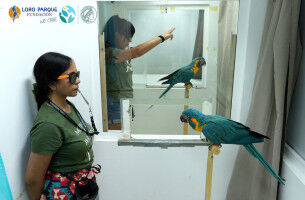
Imitation : Blue-throated macaws learn new behaviors by observing interactions of their conspecifics. When they observed how other animals reacted to specific hand signals from humans, the birds reproduced those reactions when subsequently shown the same hand signal. Learning differences : Animals that were unable to observe showed significantly slower and less accurate learning compared to the observing blue-throated macaws.
Health - Life Sciences - 03.09.2025
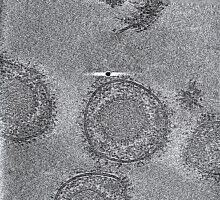
Researchers in Hamburg and Göttingen have generated a mini-antibody that neutralizes a protein essential for the infection Structure of herpesvirus resolved: Researchers determined the high-resolution structure of fusion-ready glycoprotein B (gB), a key protein complex that fuses the viral membrane with the host cell membrane.
Life Sciences - Health - 01.09.2025

Knowing how shrews loose brain volume over winter is the first step to understanding how they reverse this loss and regrow healthy brains in summer Water cure: The study found that common shrews shrink their brains in winter not by losing cells, but by losing water. Brain scans: The team used MRI scanning, the same technology used in hospitals, to peer inside the brains of live shrews across seasons.
Earth Sciences - Environment - 29.08.2025

Moist air masses from the Mediterranean caused rainfall, which filled some of the Tibesti mountain's volcanic craters Unclear origin: Several thousand years ago, deep crater lakes existed in the Tibesti mountains in the Sahara, but it is unclear where the water that filled them came from Interdisciplinary approach: Researchers have solved the mystery using geochemical methods, terrain analyses, as well as climate and hydrological modeling Surpri
Life Sciences - 28.08.2025

Study reveals how changes in cell behavior and numbers can drive the formation of distinctive grooves and ridges in the brain Understanding brain wrinkles : A new study sheds light on a major question in brain development - how the distinctive folds in the cortex, seen in humans, whales, and some other animals, form.
History & Archeology - Health - 26.08.2025

Researchers base calculations on six different methods and reach the same conclusion Life Expectancy: A recent study shows that life expectancy is no longer increasing as quickly for people born between 1939 and 2000. Researchers predict that these generations will not reach an average age of 100. Slower Increase: Life expectancy gains have slowed significantly, with increases of only two and a half to three and a half months per generation from 1939 to 2000, compared to five and a half months for earlier generations.
Health - 26.08.2025

Avoiding information: Around one third of people avoid medical information, especially in the case of serious illnesses, due to fear and a lack of trust in the healthcare system. Study basis: The meta-analysis is based on 92 studies with 564,497 participants from 25 countries, including Germany, and shows that information avoidance is a widespread phenomenon.
Agronomy & Food Science - History & Archeology - 25.08.2025
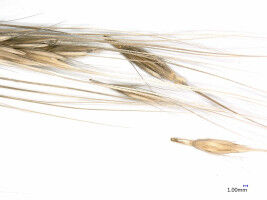
Early hunter and gatherers harvested wild barley in today-s southern Uzbekistan New discovery: A study reveals that people in southern Uzbekistan harvested wild barley at least 9,200 years ago, challenging previous beliefs about the origins of agriculture. These findings suggest that gathering wild plants was more widespread than previously thought.


