







news
Max Plank Society
Results 21 - 40 of 484.
Environment - Life Sciences - 07.01.2026
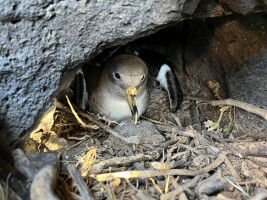
First study of wild animals shows mercury and certain PFAS compounds alter how birds convert food into cellular energy Cellular energy threats : Presence of mercury was linked to inefficient fuel use during energy production in wild birdscells, while certain perand polyfluoroalkyl substances (PFAS) may prevent protective responses to cell stress Foraging shapes exposure : Older birds and males carried more mercury through diet, food choice and l
Astronomy & Space - Physics - 18.12.2025
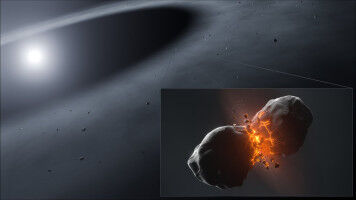
Astronomers have repeatedly observed events near a distant star that mirror processes from the early solar system-s planet-forming era Powerful collisions observed in space: Hubble images show the formation of two enormous dust clouds caused by collisions between kilometre-sized celestial bodies in the young planetary system around the star Fomalhaut.
Health - Life Sciences - 17.12.2025
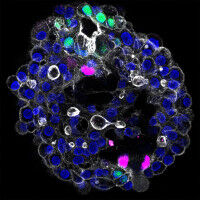
Three-dimensional multicellular human liver model: For the first time, a 3D human organoid model, developed with liver tissue from patients, consists of three liver cell types, derived from adult hepatocytes, cholangiocytes, and liver mesenchymal cells. Retaining structure and function: The novel complex organoid models, or assembloids, reconstruct essential structural and functional features of the human periportal liver region and have patient-specific traits.
Materials Science - Physics - 16.12.2025
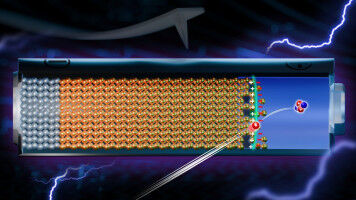
Solid-state batteries could store electricity more efficiently and safely in the future than today's batteries with liquid electrolytes. Space charges that form in solid-state batteries have so far impaired their performance. Space charges form primarily at the positive pole of the batteries. This provides a starting point for preventing their formation by modifying the structure or material of the electrode.
Health - Pharmacology - 15.12.2025

Large-scale drug atlas uncovers new genome editing modulators and potential therapeutic strategies for DNA repair-deficient cancers A comprehensive catalog of drug-DNA repair interactions: The study describes how more than 2,000 approved pharmaceuticals influence genome editing outcomes, creating a valuable resource for translational and therapeutic applications.
Life Sciences - Psychology - 10.12.2025

A new study led by cognitive neuroscientists at the University of Colorado Boulder and the Max Planck Institute for Human Cognitive and Brain Sciences shows that merely imagining a positive encounter with someone can make you like them better by engaging brain regions involved with learning and preference.
Life Sciences - Health - 10.12.2025
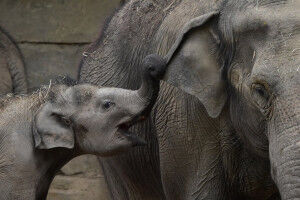
Comparative study across 117 mammals shows that blocking reproduction increases life expectancy Extended lifespan: Blocking reproduction extends lifespan by approximately ten percent across many mammals, sometimes more. Reproductive block: Male longevity rises only with castration (testosterone effect), while female lifespan benefits from any reproductive block, likely due to lower energy costs of pregnancy and lactation.
Politics - Social Sciences - 03.12.2025
How group loyalty and helpfulness determine our conflict behavior
Ingroup favoritism: A new study shows that helpfulness toward one's own group and disadvanting against outgroups are related. Behavioural tests: The research team developed a new method to measure both behaviors independently. Conflict experience: both tendencies, altruism and parochialism, affect our behavior in intergroup conflict.Whether we help others or not depends on our own experiences with conflict.
Politics - 25.11.2025
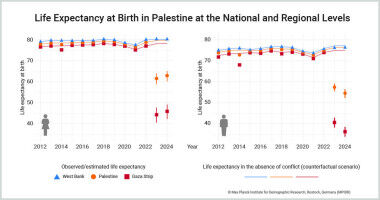
Researchers analyze the human toll of the ongoing conflict using a statistical model that takes data uncertainties into account Rising death tolls: A study by the Max Planck Institute for Demographic Research (MPIDR) and the Centre for Demographic Studies (CED) examined the effects of the conflict in Gaza on mortality.
Life Sciences - 20.11.2025
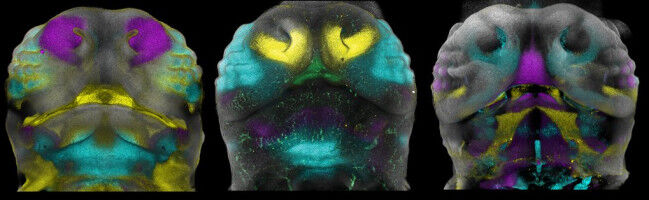
Positional programs: Undifferentiated mesenchymal cells express positional programs: the cells know where they are before knowing what they will become. Genetich positional programs forecast the emergence of individual facial features Abnormalities: Mutations in discovered programs are linked to numerous craniofacial syndromes and facial abnormalities.
Astronomy & Space - 20.11.2025

New research suggests that the body that collided with Earth 4.5 billion years ago, creating the Moon, originated in the inner Solar System. -Ingredientsof impactor: In the current issue of the journal Science, researchers determine the possible composition of Theia. Search for birthplace: The impactor-s composition allows conclusions about its place of origin.
Linguistics & Literature - 17.11.2025
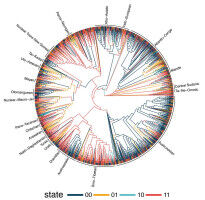
New study finds one-third of grammatical -universalsstand up to rigorous testing Linguistic universals: Of the 191 proposed linguistic universals, about one-third are statistically supported across more than 1,700 languages. A wealth of data and state-of-the-art statistical methods: Using Grambank and Bayesian statistical models that control for genealogical and geographic influences, the strongest evidence emerges for patterns of word order and hierarchical agreement.
Environment - History & Archeology - 17.11.2025
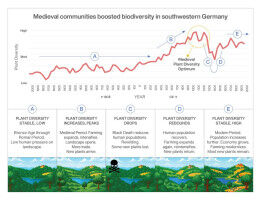
Biodiversity: An international study shows that medieval communities on Lake Constance actively increased biodiversity. Researchers document an increase in plant diversity that peaked around 1000 AD. Human activities: The study proves that human activities can support the health and resilience of environments, which is also important for modern nature conservation strategies.
Earth Sciences - Environment - 05.11.2025
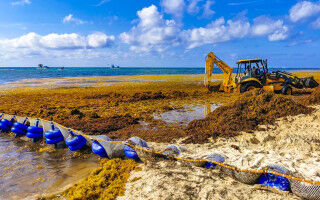
Upwelling of phosphorus-rich deep water promotes an N-fixing symbiont of the Sargassum algae giving it a competitive advantage. Each year, vast mats of Sargassum spread across the tropical Atlantic, fouling Caribbean coastlines. Analyses of coral drill cores help explain the mechanism that drives these brown algal blooms.
Life Sciences - 04.11.2025
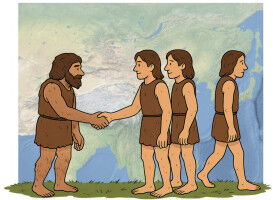
Researchers reveal the dynamics of Denisovan ancestry in Eurasians over the past 40,000 years Denisovan DNA in ancient humans: DNA segments inherited from Denisovans were identified in over 100 ancient human genomes from across Eurasia. Varying levels of Denisovan ancestry: The earliest East Asians carried higher Denisovan ancestry than later East Asians.
Health - Life Sciences - 30.10.2025
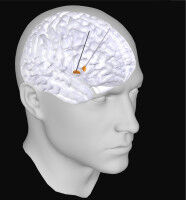
So-called -noiserepresents a previously overlooked signature that reflects Parkinson-s disease symptoms. New Discovery: Researchers found that previously ignored brain signals, called noise, reflect symptoms of Parkinson's disease. Rhythmic vs. Nonrhythmic Activity: The researchers distinguished between rhythmic and nonrhythmic brain activity, finding that this separation offers better insights into movement symptoms.
Astronomy & Space - Physics - 28.10.2025

Two gravitational wave signals explain why the heavier black holes of the causal pairs did not originate in a stellar explosion Unusual signals: Two extraordinary gravitational wave events, which can also be traced back to two pairs of merging black holes, stand out from the data jointly observed by the LIGO, Virgo, and KAGRA detectors in the fall of 2024.
Astronomy & Space - Earth Sciences - 27.10.2025
The Mars rover Perseverance has collected numerous samples that are to be sent to Earth. Current studies are preparing for the future handling of this material. New report: An international team of researchers has published a report on how Mars samples should be handled from a scientific point of view when they arrive on Earth.
Life Sciences - Environment - 23.10.2025
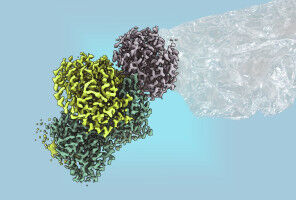
A bacterial enzyme could be the key to sustainable production of the plastic building block ethylene The conventional production of ethylene releases large quantities of greenhouse gases. A bacterial enzyme from Rhodospirillum rubrum could make it possible in future to produce the plastic building block ethylene without CO2 emissions.
Life Sciences - Health - 20.10.2025
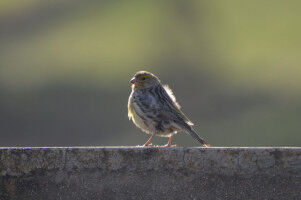
Brain plasticity : The brains of canary females maintain the ability to sing throughout their lives, even though the birds do not usually sing, shining light on how neural circuits can stay dormant yet functional. Change in behavior : Researchers found that a brain region important for singing (the -HVC-) does not to physically grow for birds to produce songs.


