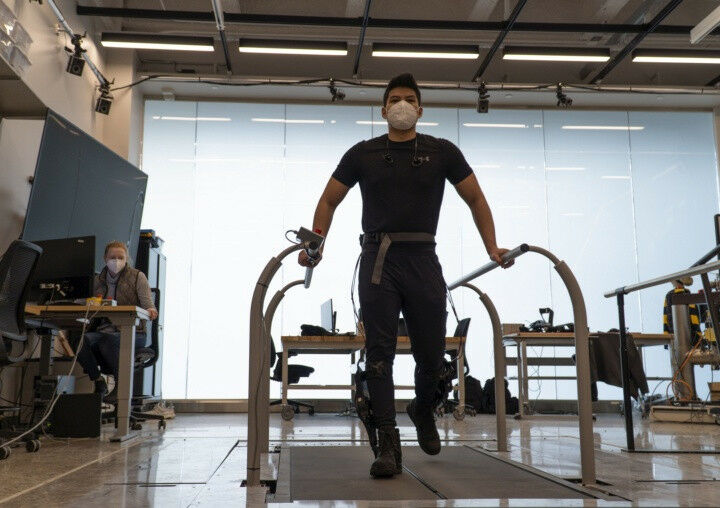
Testing an ankle exoskeleton in the Neurobionics Lab at the University of Michigan. Photo: University of Michigan/Robotics Institute
Testing an ankle exoskeleton in the Neurobionics Lab at the University of Michigan. Photo: University of Michigan/Robotics Institute - Researchers from the University of Michigan and the University of Stuttgart developed a method by which users can adjust exoskeletons themselves. [Picture: University of Michigan/Robotics Institute] Robotic exoskeletons support the movements of the persons wearing them and, for example, help impaired users to regain mobility. For the optimal cooperation between man and machine, complex adjustments are required so that the exoskeleton can provide the best possible level of support. In a collaboration between the University of Michigan and the University of Stuttgart, researchers have now demonstrated a method by which the users themselves can adjust the behavior of an ankle exoskeleton in less than two minutes. This puts the users in control and allows them to take into account their own preferences. The journal Science Robotics covered this in the issue from March 30, 2022.
TO READ THIS ARTICLE, CREATE YOUR ACCOUNT
And extend your reading, free of charge and with no commitment.