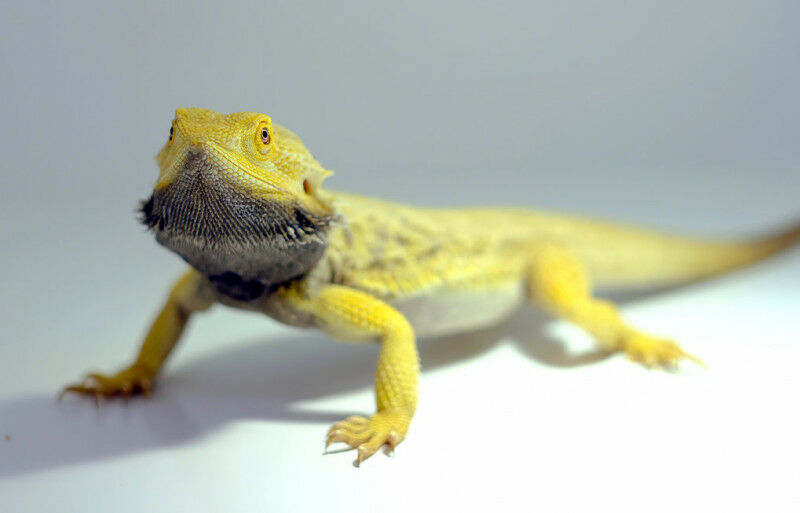
 The Australian bearded dragon Pogona vitticeps.
A molecular atlas of an Australian dragon's brain sheds new light on over 300 million years of brain evolution. The Australian bearded dragon Pogona vitticeps. Max Planck Institute for Brain Research / G. Laurent - These days, dragons are keeping Game of Thrones fans on their toes. But they are also providing important insights into vertebrate brain evolution, as revealed by the work of Max-Planck scientists on the brain of the Australian bearded dragon Pogona vitticeps . Vertebrate evolution took a major turn 320 million years ago when early tetrapods (animals with four limbs) transitioned from water to land, eventually giving rise to three major clades: the reptiles, the birds (an offshoot of the reptilian tree) and the mammals. Because of common ancestry, the brains of all tetrapods share a similar basal architecture established during early development. Yet, how variations on this common "Bauplan" contributed to clade-specific attributes remains unclear.
TO READ THIS ARTICLE, CREATE YOUR ACCOUNT
And extend your reading, free of charge and with no commitment.
Your Benefits
- Access to all content
- Receive newsmails for news and jobs
- Post ads