Archaeologist Oren Tal will be visiting Münster as a Humboldt Research Fellow
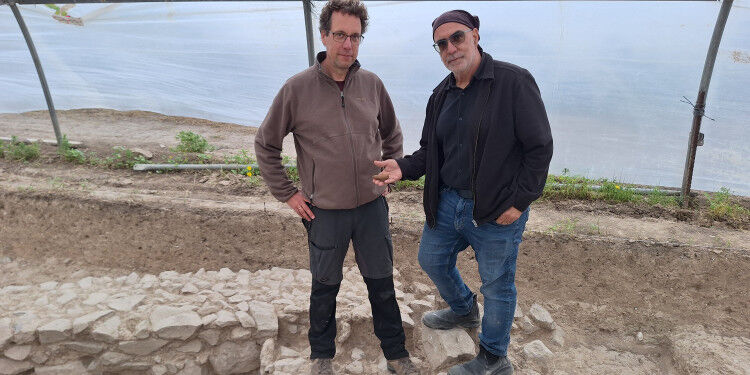
This successful collaboration will soon deepen further. Achim Lichtenberger, who holds the Chair of Classical Archaeology at the University of Münster, has successfully nominated his long-time colleague for the Alexander von Humboldt Research Award, endowed with 80,000 euros. As a result, Oren Tal - an internationally recognized expert on the classical and medieval periods Near East - will conduct research in Münster during the summer semester of 2026.
"Oren Tal is one of Israel’s leading classical archaeologists," Achim Lichtenberger emphasizes. Oren Tal responds in kind: "We share the same research interests, and our expertise complements each other exceptionally well."
Based at Tel Aviv University, Oren Tal researches the material culture of the Near East, particularly in the southern Levant. Specializing, among other fields, in the material culture of the Persian period (539-332 BCE) - a formative era in the development of Judaism - his work provides essential insights into the early history of monotheistic religions.
Another focus of his scholarship is the final publication of forgotten excavations - whose material and archival findings that have languished in storerooms for decades. "This points to a fundamental problem in archaeology," says Achim Lichtenberger. "Every excavation alters or destroys cultural remains. Publication is therefore an ethical and scientific obligation. Unfortunately, many excavations remain unpublished and thus inaccessible to researchers."
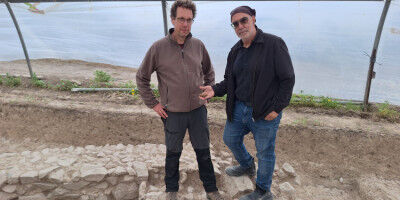
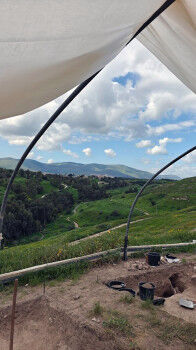
The February excavation south of the Sea of Galilee, where the video call took place, forms part of ’ Founded by the Seleucids in the first half of the second century BCE and destroyed by the Hasmoneans about sixty years later, the site provides rare insights into a period of regional history that remains significantly under-researched. Understanding the Seleucid presence is crucial for reconstructing the political, cultural, and economic dynamics of later centuries.
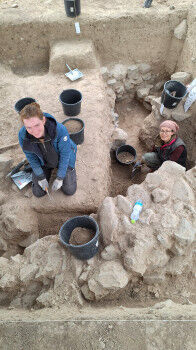
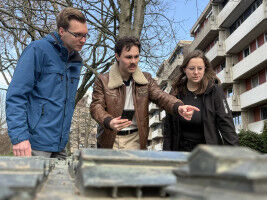
Students and early-career researchers from Münster also participated in the fieldwork. At the excavation house, Oren Tal delivered lectures on the archaeology of the Levant during the Persian and Hellenistic periods. "The ceramic material helped us anticipate what we would encounter in the trenches and how to interpret it," reports doctoral candidate Mattanja Bakker, supervised by both Achim Lichtenberger and Oren Tal.
During his research stay in Münster, Oren Tal plans to advance his work on Hellenistic urbanism and material culture - further strengthening the scholarly ties between Tel Aviv and Münster.