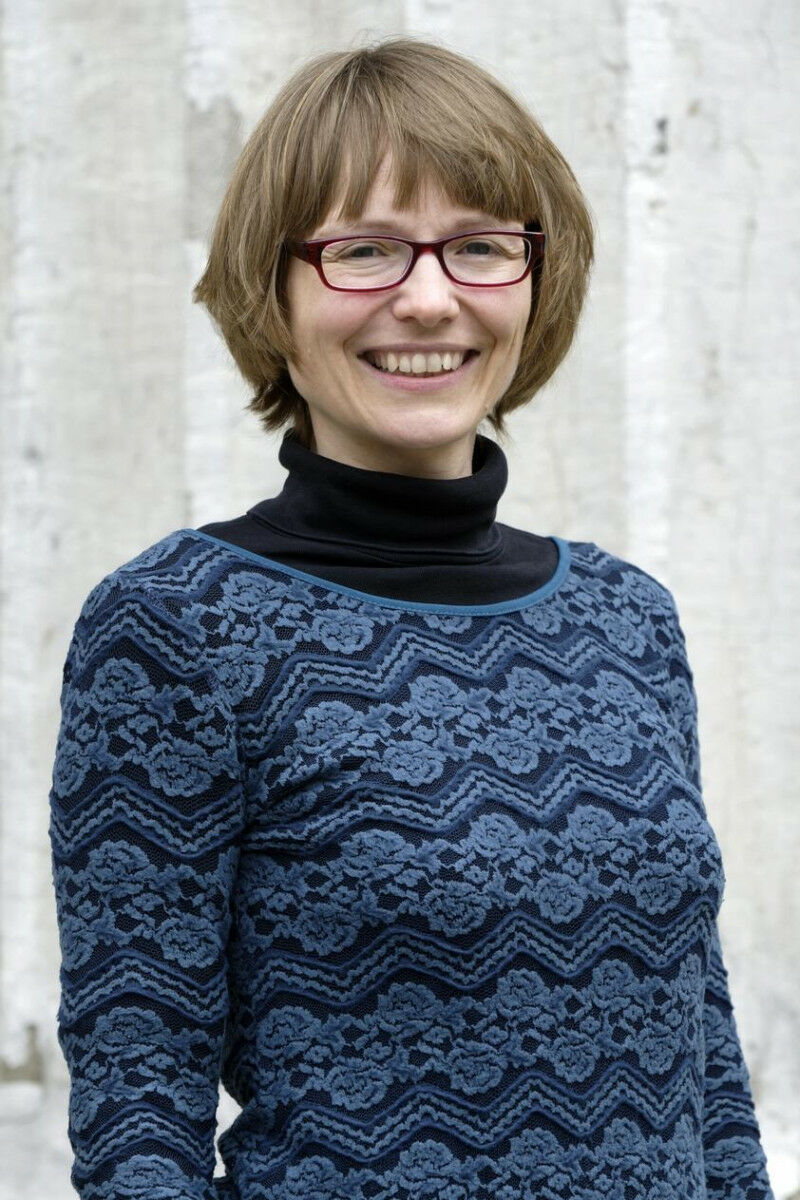
Professor Heike Vallery is now a member of the German Academy of Sciences Leopoldina.
Heike Vallery has received a great honor: the mechanical engineer is now a member of the German National Academy of Sciences Leopoldina. Being inducted into it is considered to be a special recognition of scientific achievement. The Leopoldina is the oldest scientific and medical academy in the German-speaking world, and it is the oldest continuously existing natural science academy in existence. It was founded in 1652, and it was appointed as the German National Academy of Sciences in 2008. In this capacity, it has two special tasks: representing German science abroad and advising politicians and the public.
Vallery moved from Delft University of Technology to the Faculty of Mechanical Engineering at RWTH Aachen University in 2023 after being awarded an Alexander von Humboldt Professorship. Her research focuses on the design and control of minimalist robotics. As head of the Institute for Automatic Control, she is a leading researcher in the fields of mechanical engineering and medicine. Her work in robotics encompasses both theory and practice. She has developed design recommendations for robots that help people with limited motor skills to move around, for example during therapy after a stroke. She designed the first 3D robot therapy environments that allow free and safe gait training on the floor, and she designed portable systems that help to stabilize a person’s gait. In her research, she works closely with clinicians and partners from industry.
For Heike Vallery, it was a return to her alma mater: she graduated from RWTH with honors in 2004. After completing her doctorate at the Technical University of Munich, she was a postdoc at ETH Zurich from 2008 to 2011. From 2011 to 2012, Vallery was an assistant professor at Khalifa University in Abu Dhabi. She then joined the Technical University of Delft in 2012.
Heike Vallery publishes in prestigious scientific journals such as Science Robotics and Nature Medicine, she has filed 19 patent applications, and she has received several grants and awards. These include the first prize of the euRobotics Technology Transfer Award 2014 and a Vidi individual grant 2016 from the Netherlands Organization for Scientific Research.
The experts who write for the Leopoldina work on a voluntary basis and without prejudice. The Leopoldina represents German science in international committees, including providing science-based advice to the annual G7 and G20 summits. It has around 1,700 members from more than 30 countries, and it combines expertise from almost all fields of research.
Last year, Professor Joost-Pieter Katoen, who has held the Chair of Computer Science 2 (Software Modeling and Verification) at RWTH since 2005, was also accepted into the academy. He recently received his certificate of admission along with the other new members of the Class of 2024.