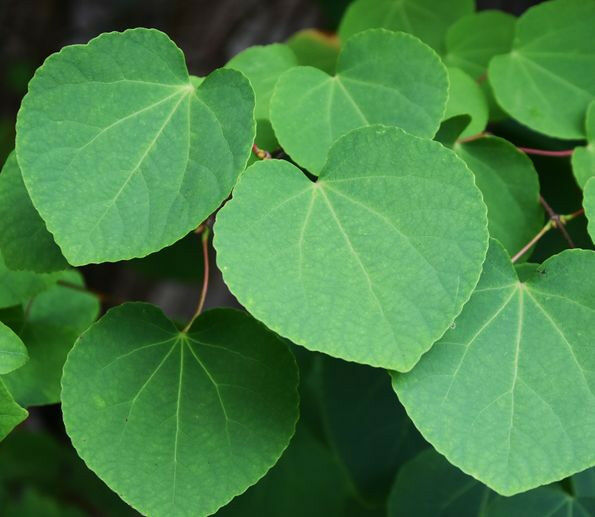
Leaf from a Pliocene tree of the genus Cercidiphyllum (C. crenatum) from the fossil site Willershausen (Germany’s Harz region)
Leaf from a Pliocene tree of the genus Cercidiphyllum (C. crenatum) from the fossil site Willershausen (Germany's Harz region) Around 50 million years ago there were extensive, lush deciduous forests in the polar regions of the Arctic, where today there is sparse vegetation. The forests existed due to the conditions in the Eocene - a combination of a greenhouse climate and almost twice the level of carbon dioxide in the atmosphere as there is today. However, the same extreme light conditions prevailed in these regions of high latitude - permanent darkness for months on end in winter and a sun that never set in summer, even if it was low in the sky. There are no comparable environmental conditions on Earth today. In their new study, Dr. Dr. Wilfried Konrad and Dr. Christopher Traiser from the Department of Geosciences at the University of Tübingen, working with Dr. Anita Roth-Nebelsick from the State Museum of Natural History in Stuttgart, investigated the conditions under which the Eocene plants lived. The researchers wanted to know whether the plants were able to balance their light requirements, given the extremely differing hours of daylight and whether the large-leaved deciduous trees that were common at the time played a role in this.
UM DIESEN ARTIKEL ZU LESEN, ERSTELLEN SIE IHR KONTO
Und verlängern Sie Ihre Lektüre, kostenlos und unverbindlich.