








news
Friedrich Schiller University Jena
Results 181 - 200 of 237.
Environment - Life Sciences - 06.11.2020
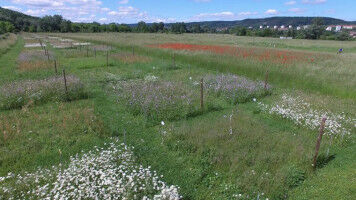
Species-rich plant communities help to naturally reduce herbivore impacts Life Increasing plant diversity enhances the natural control of insect herbivory in grasslands. Species-rich plant communities support natural predators and simultaneously provide less valuable food for herbivores. This was found by a team of researchers led by the German Centre for Integrative Biodiversity Research Halle-Jena-Leipzig (iDiv), who conducted two analogous experiments in Germany and the USA.
Life Sciences - Environment - 29.10.2020
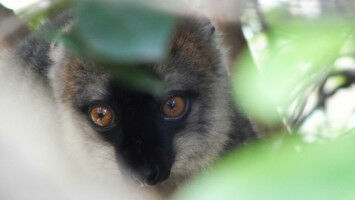
New research group investigates the communication between plants and their consumers A new research area will be established at the Friedrich Schiller University. From November 2020, the biologist Dr Omer Nevo will head the new Junior Research Group "Evolutionary Ecology", that works at the German Centre for Integrative Biodiversity Research (iDiv) in Leipzig.
Environment - Life Sciences - 27.10.2020
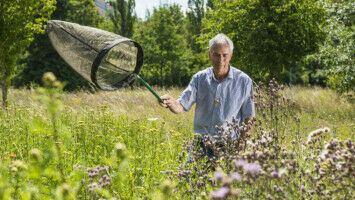
Biodiversity loss is continuing relentlessly worldwide. In order to counteract this more effectively, monitoring programmes are needed which precisely map the circumstances of animal and plant species and the extent to which they are under threat. But too often, these are still inadequate - the range of species examined is not extensive enough, and there is too little coordination.
Life Sciences - Physics - 27.10.2020
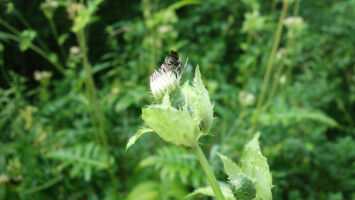
Phytoplasma effector proteins devastate host plants through molecular mimicry Phytoplasma are a type of bacteria that live within the cells and cause devastating diseases with damaging effects. For example, in many cases plants infected with phytoplasma are no longer able to develop flowers. These plants have actually been described as "zombies," since they allow the reproduction of phytoplasma but are unable to reproduce themselves anymore.
Life Sciences - 22.10.2020
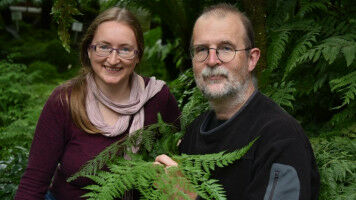
An international research consortium to which scientists from Jena contributed has presented data on how plant groups, their genes and genomes have developed in more than a billion years. Life Today, the results of a mammoth project have been published by more than 200 scientists from more than 130 research institutes all over the world.
Pharmacology - Life Sciences - 22.10.2020
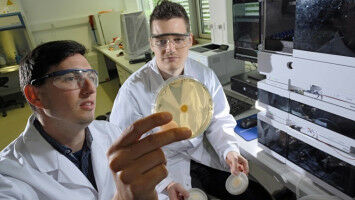
Research team discovers previously unknown natural products in soil fungus Mortierella alpina. Life Mortierella alpina lives in the soil and likes to keep cool. This fungus, which belongs to the zygomycetes, grows best at temperatures of 10 to 15°C and occurs mainly in alpine or arctic habitats. In biotechnology, the fungus has been used for the large-scale production of polyunsaturated fatty acids such as arachidonic acids, mainly used as a dietary supplement in baby foods.
Health - Life Sciences - 13.10.2020
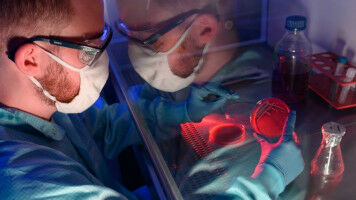
Research team uncovers that a toxic substance found in Staphylococcus aureus stimulates tissue regeneration Life Normally they are among the many harmless organisms found in and on the human body: one in four people have millions of Staphylococcus aureus bacteria on their skin and on the mucous membranes of the upper respiratory tract, without being aware of it.
Life Sciences - Health - 08.10.2020
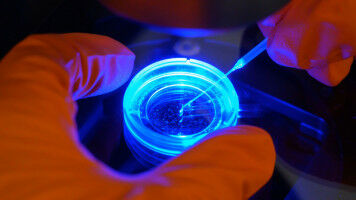
Interdisciplinary research team receives up to 4.5 million euros in funding from the Carl Zeiss Foundation Life Liberty As the saying goes: " You're only as old as you feel ", suggesting that it is not simply the number of years lived that determines a person's age. Biological age depends on many factors and is also subject to psychological influences.
Physics - Materials Science - 07.10.2020

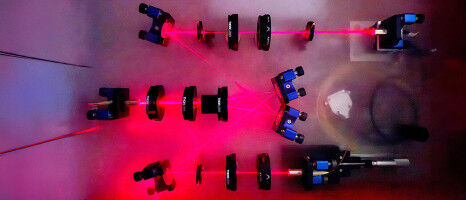
Physicists and chemists at the University of Jena engineer optical fibres with 2D materials Light At the latest since the Nobel Prize in Physics was awarded for research on graphene in 2010, 2D materials - nanosheets with atomic thickness - have been a hot topic in science. This significant interest is due to their outstanding properties, which have enormous potential for a wide variety of applications.
Chemistry - Materials Science - 25.09.2020
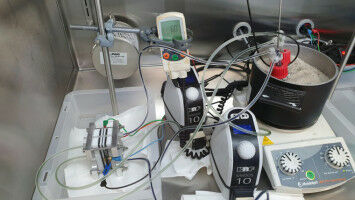
Chemists at the University of Jena develop new polymer electrolytes for redox flow batteries Light The share of energy from renewable sources is constantly on the rise in Germany. At the beginning of 2020, for the first time ever, renewable energy was able to cover more than half of the electricity consumed in Germany.
Astronomy & Space - Physics - 22.09.2020

Astrophysicists prove that dust particles in space are mixed with ice Light The matter between the stars in a galaxy - called the interstellar medium - consists not only of gas, but also of a great deal of dust. At some point in time, stars and planets originated in such an environment, because the dust particles can clump together and merge into celestial bodies.
Health - Life Sciences - 01.09.2020
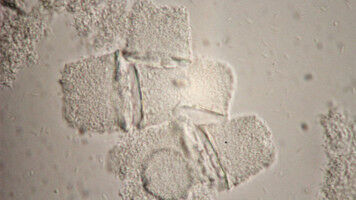
Helper bacteria stop and disarm pathogens Life The bacterium Pseudomonas tolaasii triggers brown spot disease in cultivated mushrooms and thus causes considerable harvest losses. The active compound Tolaasin, which is produced by the pathogen, damages the cell membrane of the fungus and the cells die.
Pharmacology - Health - 07.08.2020

A study to balloon angioplasty with drug-coated and uncoated balloons in vascular occlusion in the femoropopliteal region proves the drug-coated devices to be superior Balloon angioplasty is the treatment option for the advanced stage of intermittent claudication - if medication and targeted training can no longer alleviate the pain and impairments caused by constricted leg arteries.
Life Sciences - Health - 06.08.2020

Research team of the Cluster of Excellence "Balance of the Microverse" identifies new regulatory sRNA molecules Light Bacteria are always with us: These tiny organisms are found within and on our body as is the case with all animals and plants. As part of a healthy microbiome they ensure our wellbeing.
Chemistry - Physics - 05.08.2020
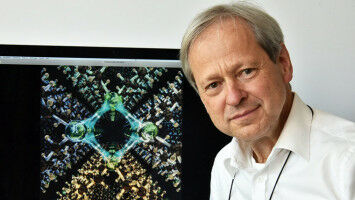
International research team discovers unusual molecular structures The periodic system contains 118 chemical elements. However, only a few of them, such as hydrogen, carbon, nitrogen, oxygen and silicon, are of major importance in our daily lives. But things become really exciting from a chemical point of view when less well-known elements are involved.
Life Sciences - Health - 12.06.2020
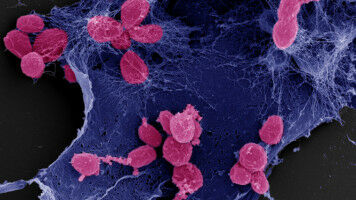
Research team discover new natural products that bacteria in water use to regulate the growth of competing organisms Life The sheer endless expanses of the oceans are hostile deserts - at least from the perspective of a bacterium living in water. Tiny as it is, its chances of finding sufficient nutrients in the great mass of water would seem to be vanishingly small.
Life Sciences - 02.06.2020
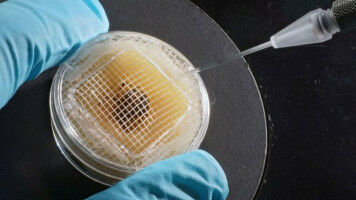
International research team proposes measures to increase the reproducibility of biomedical experiments For some scientific disciplines, such as medical or drug research, experiments with live animals are still indispensable. Scientists are aware of their responsibilities in this sensitive area and strive to keep the number of experiments as low as possible.
Life Sciences - Chemistry - 15.05.2020
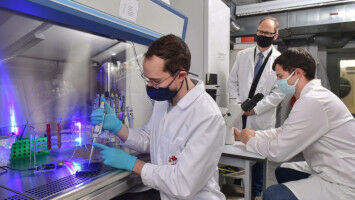
A research team from Jena, Munich and New York develops an active substance that controls an important component of the cytoskeleton with the help of light Light Life Photopharmacology investigates the use of light to switch the effect of drugs on and off. Now, for the first time, scientific teams from Jena, Munich, and New York have succeeded in using this method to control a component of cells that was previously considered inaccessible.
Life Sciences - Pharmacology - 11.05.2020
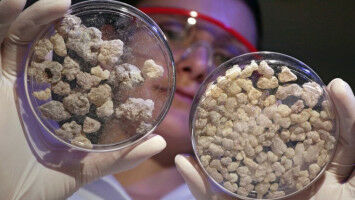
Research team has clarified the anti-inflammatory effect of a natural product from frankincense resin Life A research team from the University of Jena and Louisiana State University (USA) has clarified the molecular mechanism behind the anti-inflammatory effect of a natural product from frankincense resin.
Pharmacology - Life Sciences - 29.04.2020

Jena University Hospital coordinates a European research network that aims at establishing therapeutic biomarkers for treatment response to ketamine The World Health Organization estimates that more than 4 million people in Germany suffer from depression. Standard therapy is working insufficiently in one third of patients; in another third, it does not work at all.


