









news
University of Stuttgart
Results 21 - 40 of 50.
Physics - 24.02.2021
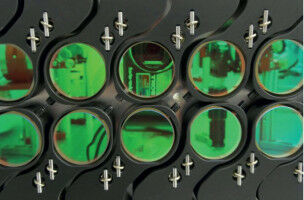
Helium is the second most abundant element in the universe after hydrogen. Helium nuclei consist of four components, namely two protons and two neutrons. Knowing the properties of the helium nucleus is crucial for fundamental physics, for example, in order to understand the processes in atomic nuclei that are heavier than helium.
Materials Science - 19.02.2021

Historische Kunstund Kulturobjekte haben oft stark verschmutzte Oberflächen, da sie über viele Jahre hinweg unterschiedlichsten Umwelteinflüssen ausgesetzt sind. Ein deutsch-französisches Team um Prof. Cosima Stubenrauch von der Universität Stuttgart erforscht nun, wie man die Kostbarkeiten mit flüssigen Schäumen schonend und umweltfreundlich reinigen kann.
Physics - Chemistry - 18.02.2021
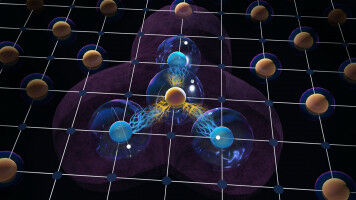
Rydberg atoms are among the most promising candidates in the race of realizing a working quantum computer. In the new collaborative project ,,QRydDemo", researchers led by the University of Stuttgart aim to realize a Rydberg quantum computer demonstrator together with an industrial partner by 2025. In order to reach this goal, they group Rydberg atoms in a two-dimensional optical trap structure and perform quantum logical operations by controlled entanglement and shifting of the atom traps.
Chemistry - 28.01.2021
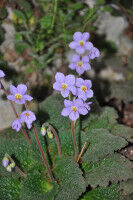
Research groups led by the polymer chemist Prof. Sabine Ludwigs and the mechanic Prof. Holger Steeb at the University of Stuttgart have developed active double-layer structures from intelligent polymers based on the structures of a flowering plant, which lean of their own accord in response to humidity and then regain their original shape.
Transport - 21.01.2021

Autonomous driving will come about. But how do you make it safe for each traffic situation, what transportation infrastructure will be required, and what will be the impact of future traffic models? Under the leadership of Audi AG, the SAVeNoW consortium is running a simulation on these questions using a digital twin of the urban traffic of Ingolstadt as an example.
Physics - 19.01.2021
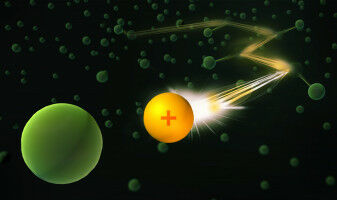
Transport processes are ubiquitous in nature but still raise many questions. The research team around Florian Meinert from the 5th Institute of Physics at the University of Stuttgart has now developed a new method that allows them to observe a single charged particle on its path through a dense cloud of ultracold atoms.
Transport - Environment - 27.12.2020

Students of Aerospace Engineering at the University of Stuttgart have developed and built the unmanned testing platform Aircraft for Research and Applied Science (ARAS). In the process, they designed the components for it to be able to withstand high loads. After the mechanical and electronic integration was finished, the "UAStudents Gruppe" (a compound made up of Unmanned Aerial System, another word for drone, and students) carried out extensive ground testing before the aircraft successfully took off for the first time in October.
Psychology - 15.12.2020
Literature and tolerance in the Victorian era
The research being carried out by Dr. Nina Engelhardt fills a gap in our understanding of tolerance as well as in (cognitive) literature, and her project has led to her being included in the Baden-Württemberg Foundation's Elite Program for postdocs. In public discourse, the word "tolerance" is often defined as respect, acceptance and recognition of other cultures.
Health - Pharmacology - 05.12.2020
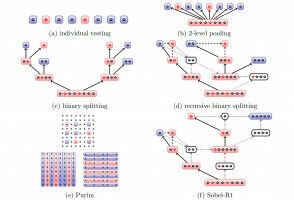
With the help of so-called pooling procedures, samples from different people can be combined into a pool and tested for Covid-19 collectively in a single test kit. An interdisciplinary team of mathematicians, computer scientists and medical doctors from the Junge Akademie, the Technische Universität Braunschweig, the Universität Stuttgart and the company Arctoris has developed a decision support tool that calculates which method is most effective in identifying all Covid-19 patients in a positive sample pool.
Chemistry - Physics - 25.11.2020
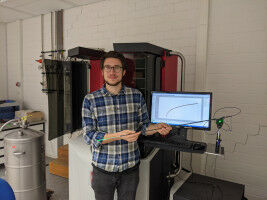
Catalysts with a metal-nitrogen bond can transfer nitrogen to organic molecules. In this process short-lived molecular species are formed, whose properties critically determine the course of the reaction and product formation. The key compound in a catalytic nitrogen-atom transfer reaction has now been analysed in detail by chemists at the Universitis of Göttingen Frankfurt and Stuttgart.
Physics - 05.11.2020
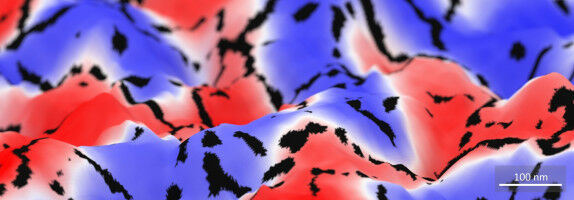
Future display technologies such as virtual and augmented reality require higher pixel resolutions and optical contrast. However, the potential of state-of-the-art displays is limited by the individual pixel size to achieve necessary resolution. Researchers at the University of Stuttgart have now succeeded to observe switching processes at previously unattained nanometer resolution.
Astronomy & Space - Chemistry - 26.10.2020
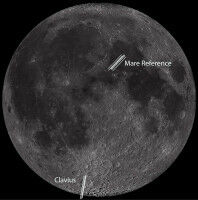
For the first time, the SOFIA (Stratospheric Observatory for Infrared Astronomy) flying observatory has provided direct and unambiguous evidence of water molecules on the moon beyond the permanent shadow at the poles. The infrared observatory, which is owned jointly by the US space agency NASA and the German Aerospace Center (DLR) was able to detect the molecules in the moon's southern hemisphere using the FORCAST (Faint Object InfraRed CAmera for the SOFIA-Telescope) instrument.
Physics - Environment - 15.09.2020
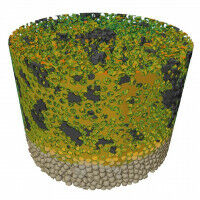
How pollutants spread in so-called partially saturated porous media - for example in sand or gravel - is difficult to compute due to the complex processes involved. A team led by Holger Steeb, Head of Research in the SimTech Cluster of Excellence as well as in the Collaborative Research Center 1313 of the University of Stuttgart, has now been able to visualize solute transport in the pore space using high-resolution synchrotron-based X-ray tomography.
Chemistry - Physics - 14.09.2020
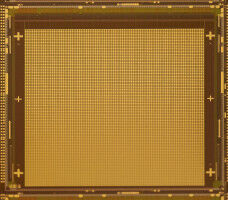
Scientists of the Micro, Nano and Molecular Systems Lab at the Max Planck Institute for Intelligent Systems and the Institute of Physical Chemistry at the University of Stuttgart have developed a digital chip that can be used to project movies with ultrasound. The researchers report on this in an article in the magazine "Nature Communications".
Physics - Campus - 11.09.2020

The overarching goal of the new Research Training Group "Towards Graduate Experts in Photonic Quantum Technologies" at the University of Stuttgart, which the German Research Foundation (DFG) approved for funding at its meeting on 6 November 2020, is to utilize the great potential of quantum physics for marketable applications.
Earth Sciences - Physics - 15.07.2020

Noise from wind turbines is a constant source of annoyance, despite compliance with emission control standards. But while some people feel heavily burdened by the noises, others hardly notice them. The Inter-Wind research project (Interdisciplinary Analysis and Mitigation Approaches - Residents' Experience of Acoustic and Seismic Wind Turbine Emissions), in which the University of Stuttgart is also involved, is investigating which factors interact in the noise pollution caused by wind turbines and which approaches for mitigation can be considered.
Life Sciences - Chemistry - 02.07.2020
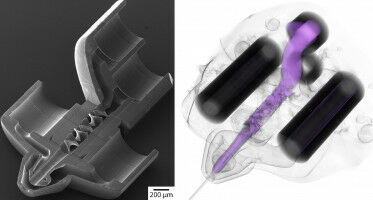
While miniaturization is already well advanced in electrical engineering, analysis and process technology in medicine and biochemistry still fills entire laboratories. Researchers from the University of Stuttgart and the Center for Free-Electron Laser Science (CFEL) in Hamburg have now developed a method which enables a laboratory to be reduced to the size of the tip of a needle.
Research Management - 05.06.2020

The use of touch screens is often difficult, especially for older people, since the information is captured primarily with the eye, but not with the sense of touch. Researchers at the Institute for Engineering Design and Industrial Design (IKTD) at the University of Stuttgart are now developing a technology that can be used to "feel" the information on the touch user interface by means of electrostatic fields.
Physics - 28.05.2020
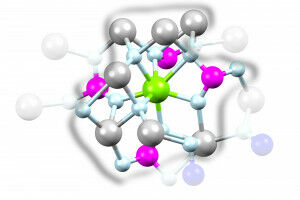
Crystals doped with rare-earths are currently used in batteries, LEDs, magnets, lasers, and much more. So far, the detection of single nuclear spins close-by a rare-earth electron spins was not feasible. Researchers at 3rd Institute of Physics, University of Stuttgart and colleagues from Beijing Computational Science Research Center now used the rare-earth cerium to measure individual silicon nuclear spins, located in the crystal lattice in close proximity to cerium.
Health - 18.05.2020
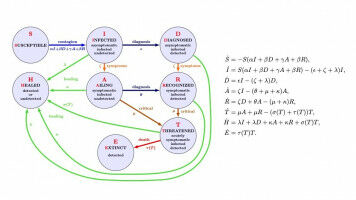
In order to keep the rate of new infections in the Covid-19 epidemic low and at the same time limit the negative consequences on social and economic life, protective measures should be adapted to the respective case numbers. But what restrictions are necessary, and which lockdown regulations can be relaxed? This is difficult to estimate due to the uncertain and dynamic data situation and the complexity of the spreading and the measures.


